The Economy Is Strong and Inflation Is High

Apollo Chief Economist

The consensus expects nonfarm payrolls for September to come in at 50,000, and I think that is too pessimistic. The charts below with incoming daily and weekly data for September show that:

1) Trade policy uncertainty is improving

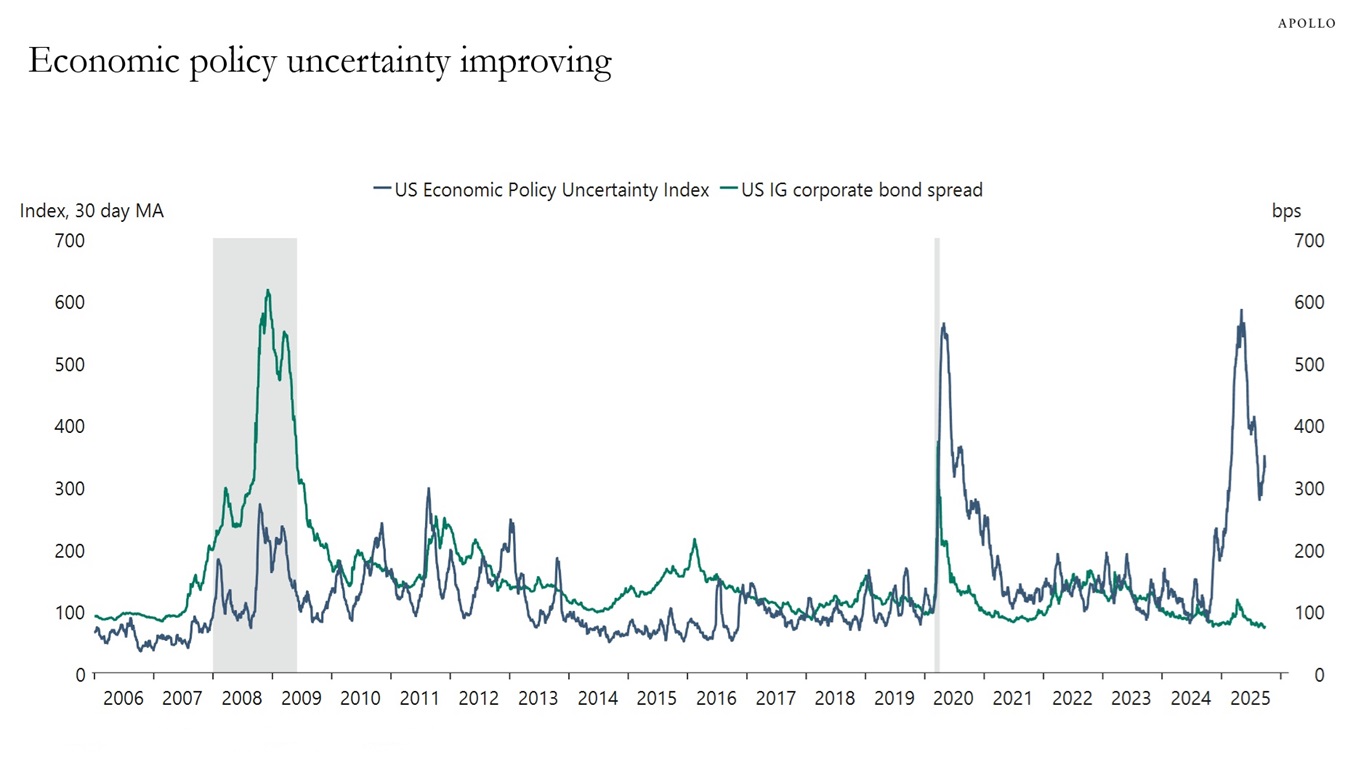
2) Economic policy uncertainty is improving

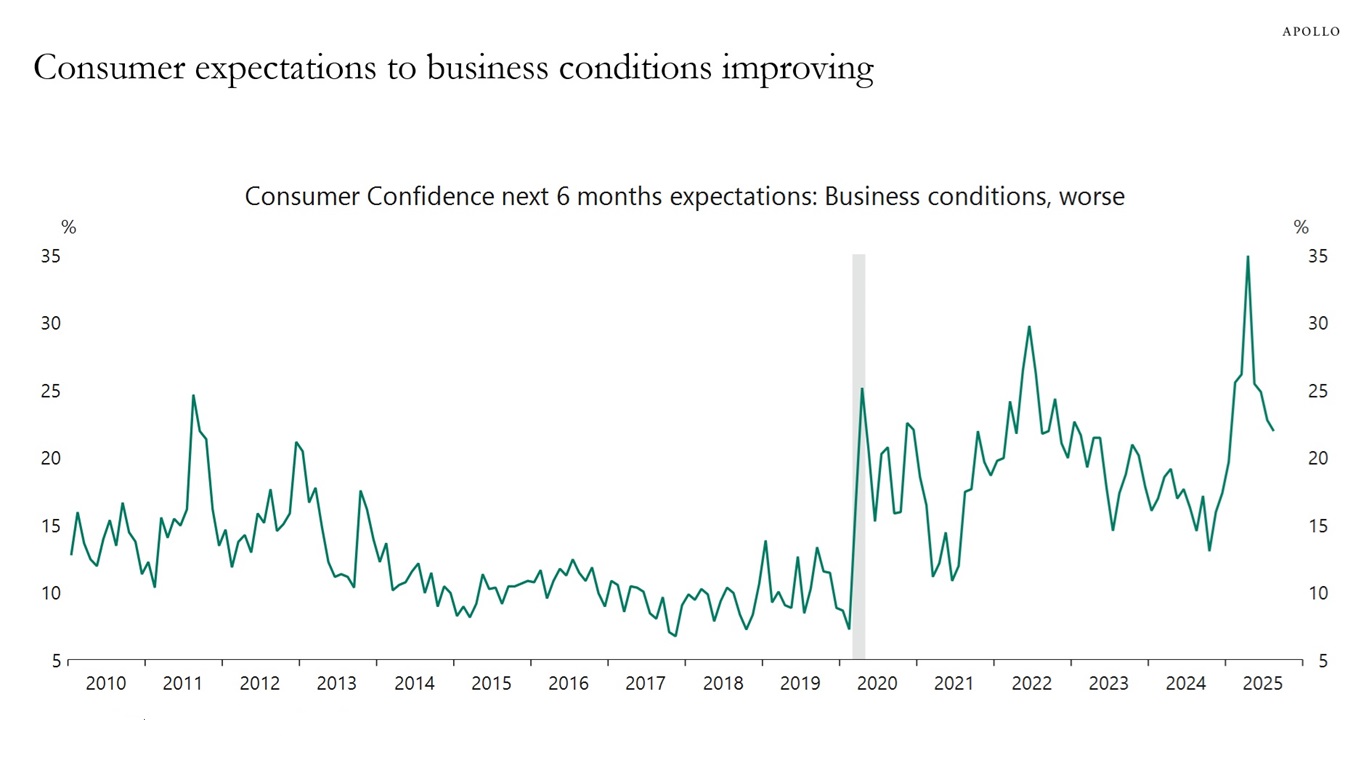
3) Consumer expectations to business conditions are improving

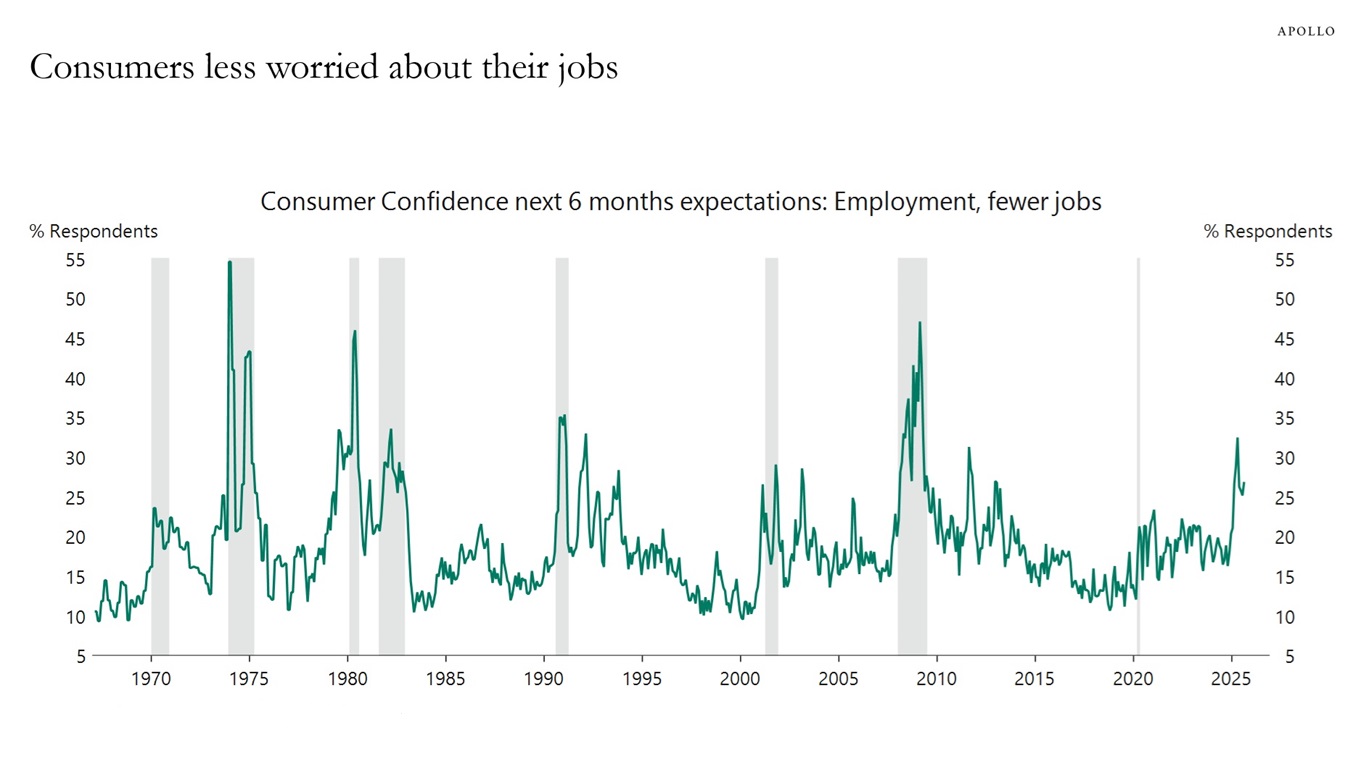
4) Consumers are less worried about losing their jobs

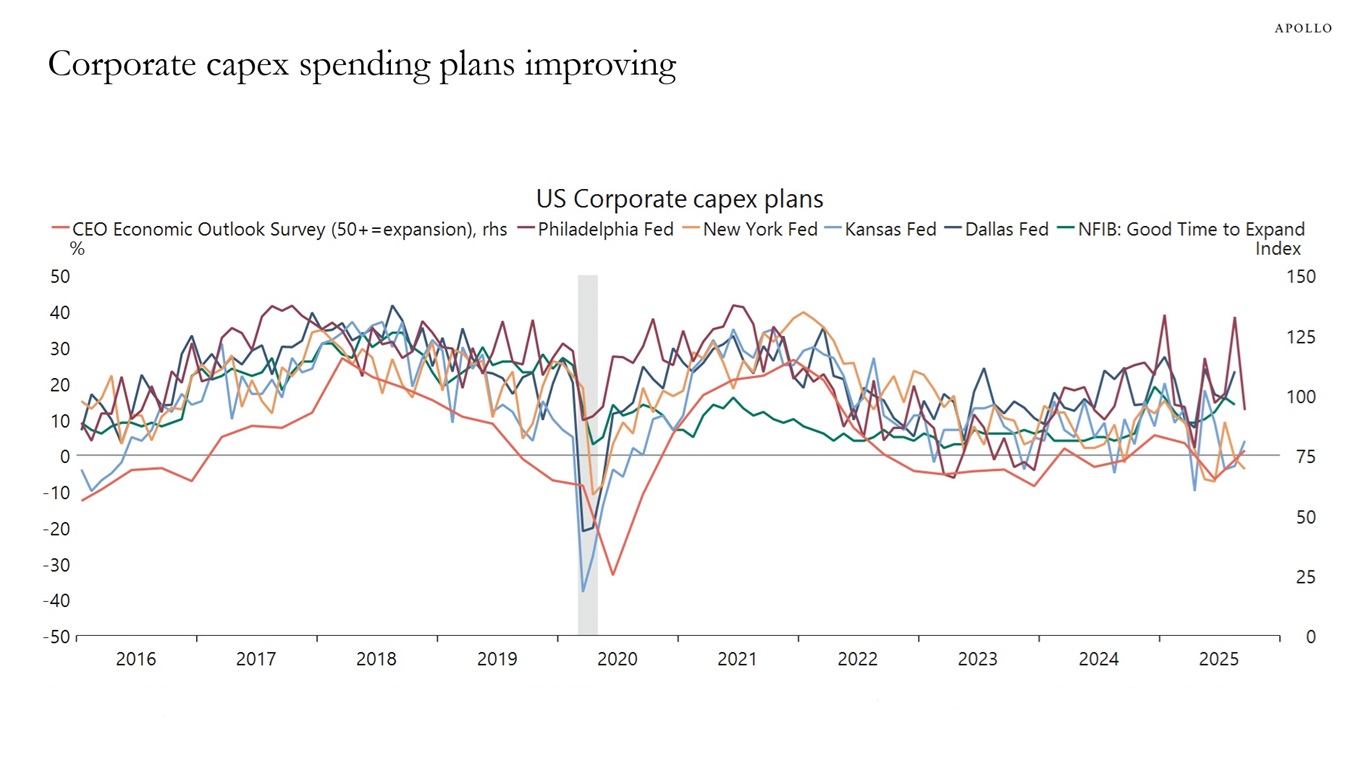
5) Corporate capex plans are improving, and jobless claims are still low

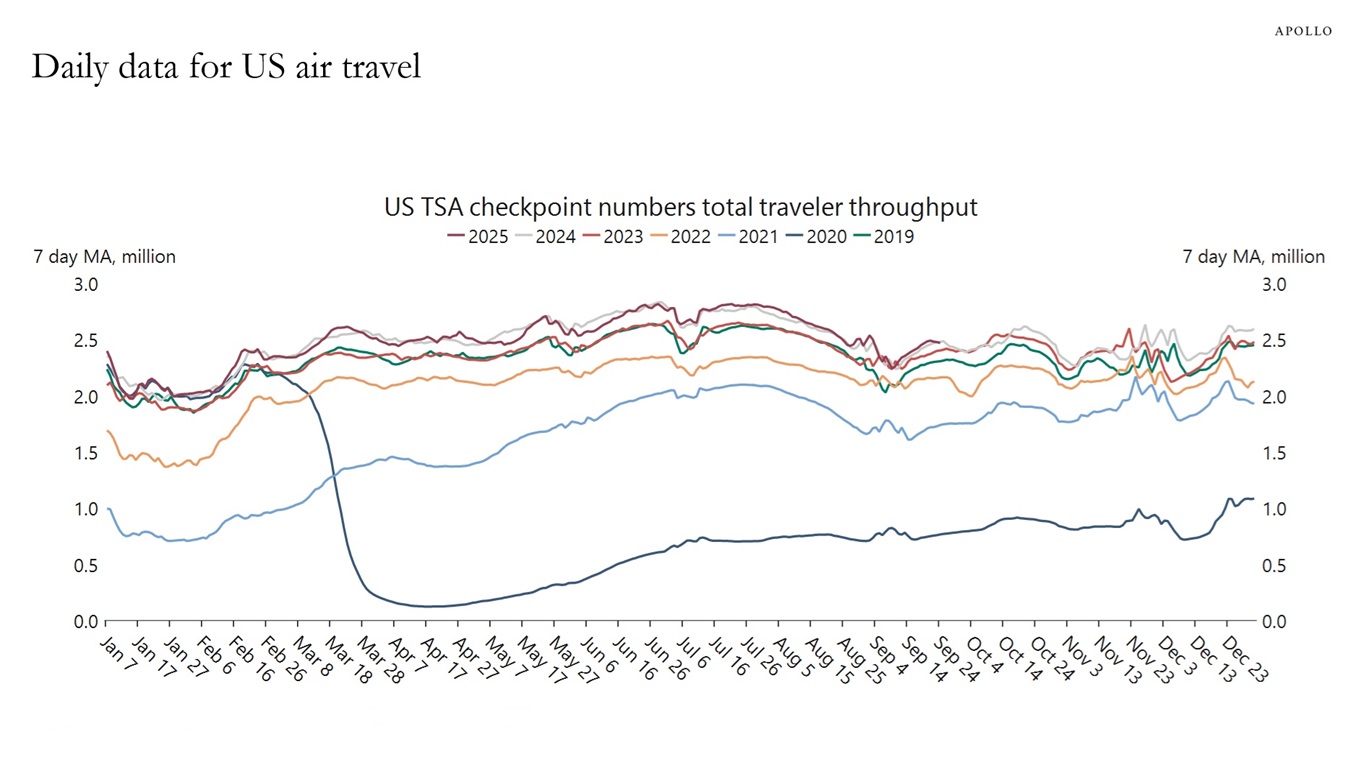
6) The daily TSA data for the number of people traveling on airplanes is strong

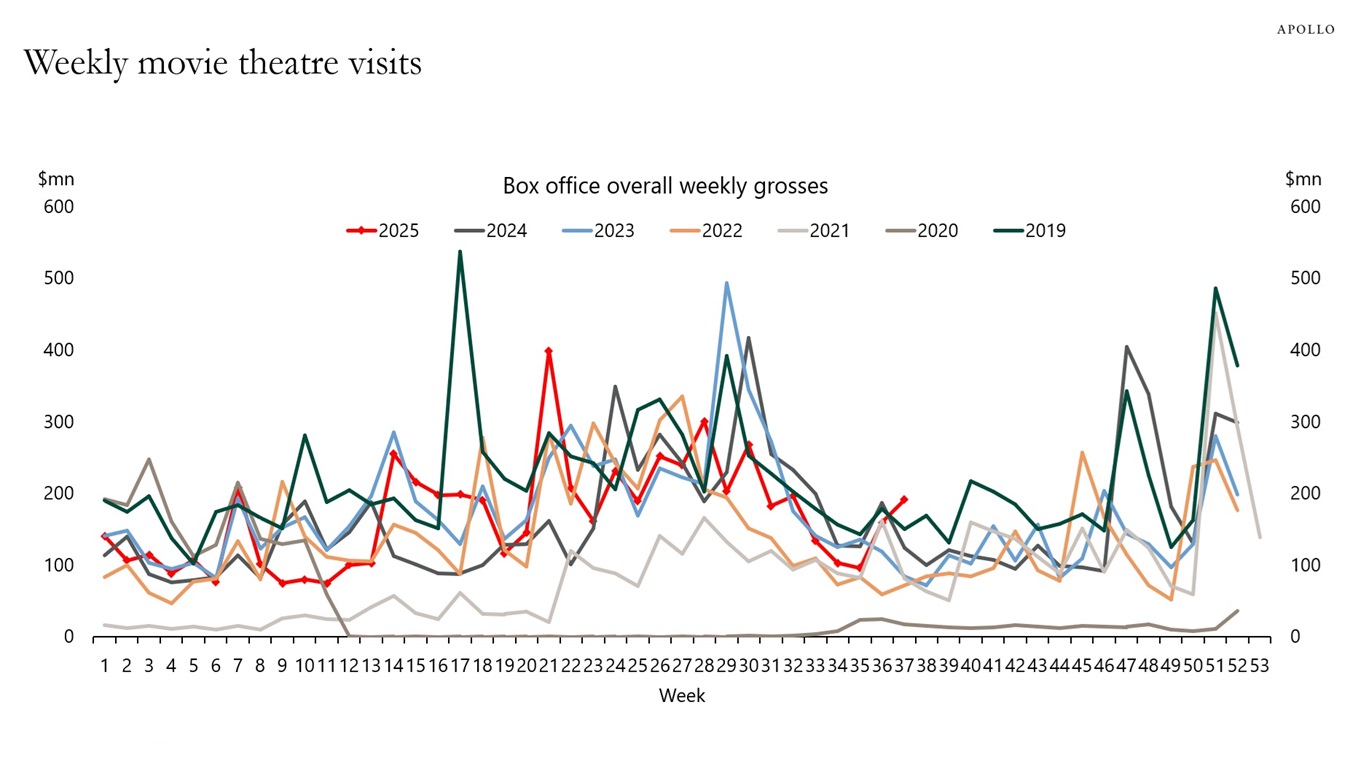
7) Data for the number of people going to Broadway shows, the movies and visiting the Statue of Liberty is strong

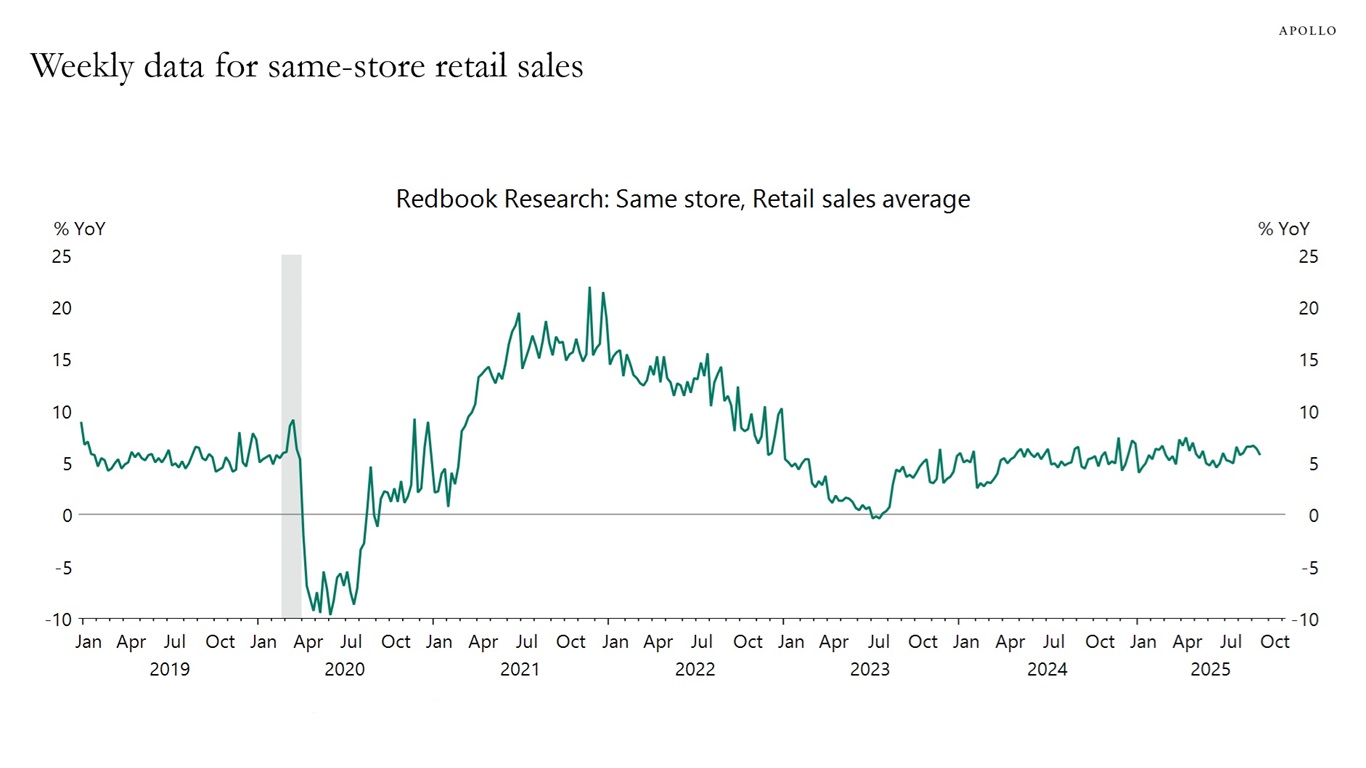
8) Weekly data for same-store retail sales is strong

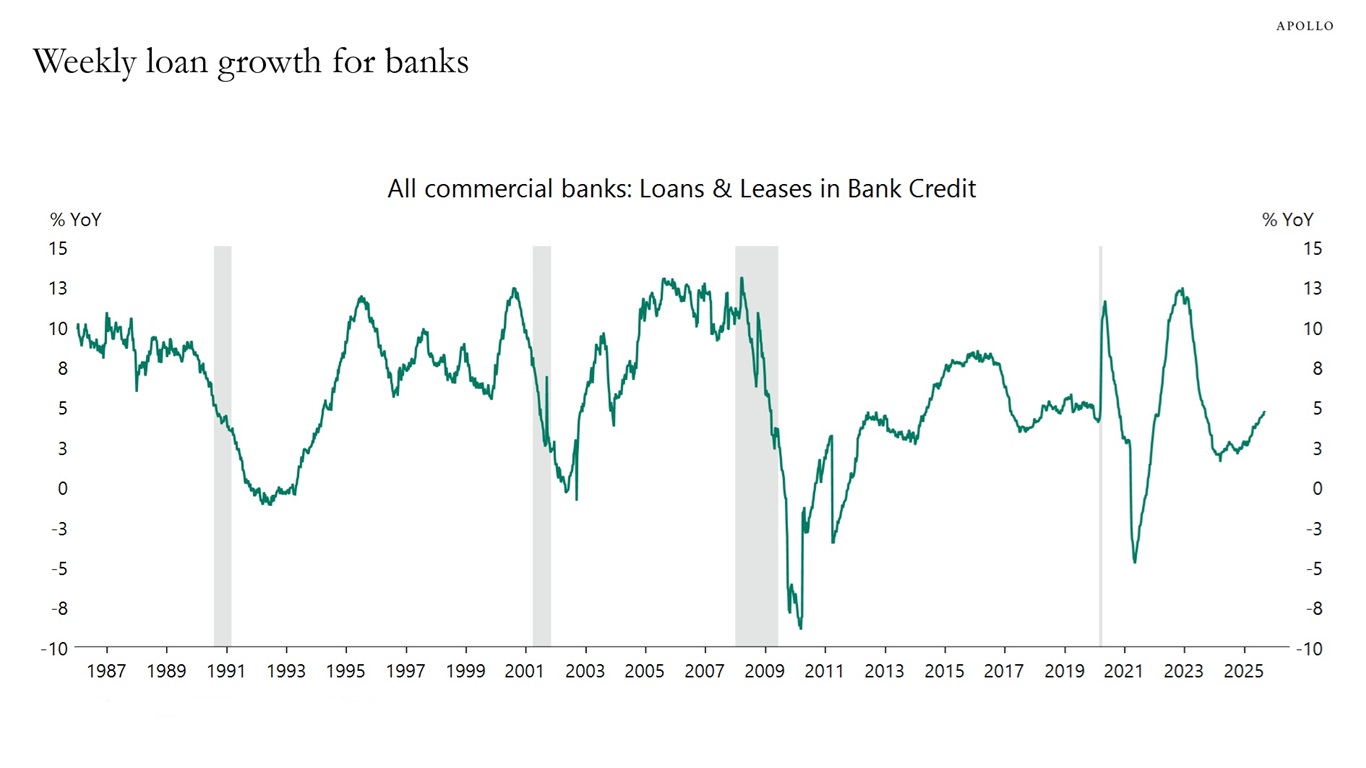
9) Weekly data for bank lending is accelerating

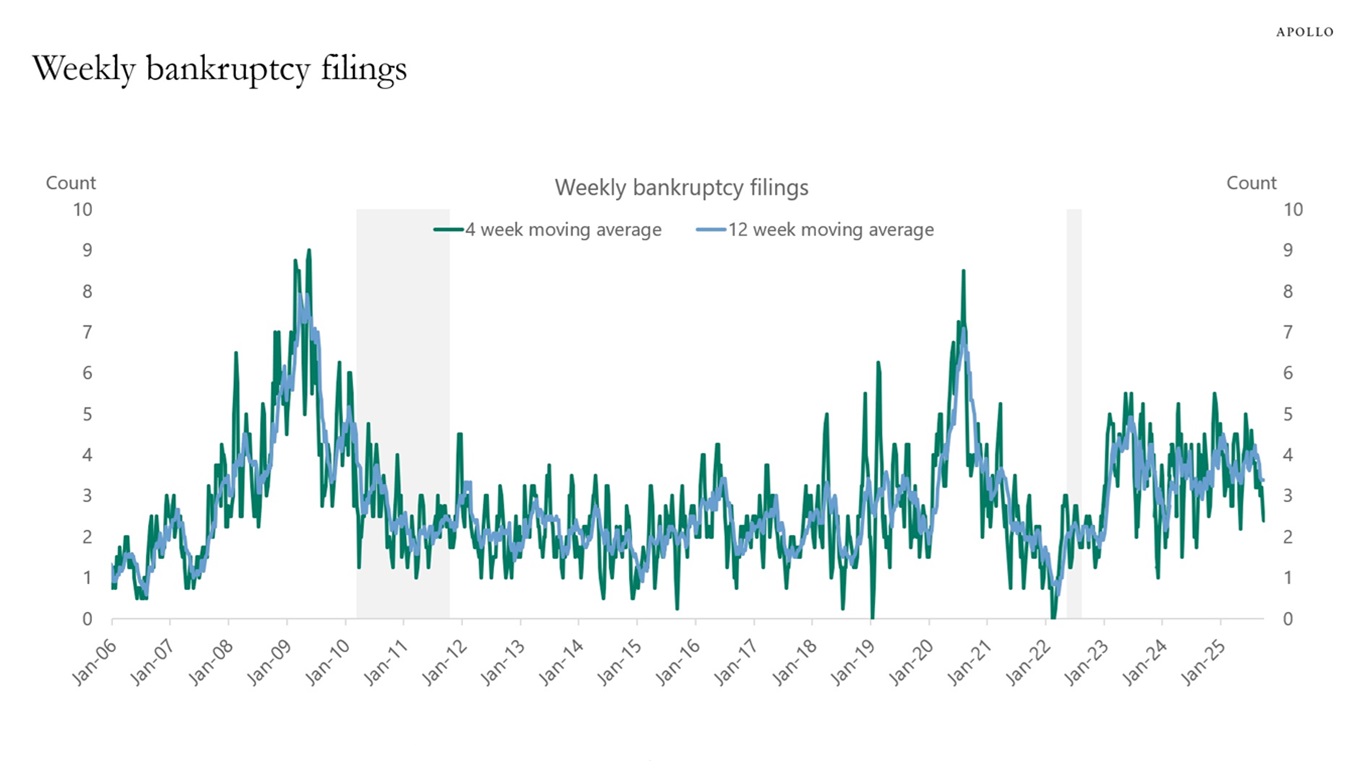
10) Weekly bankruptcy filings are starting to trend lower

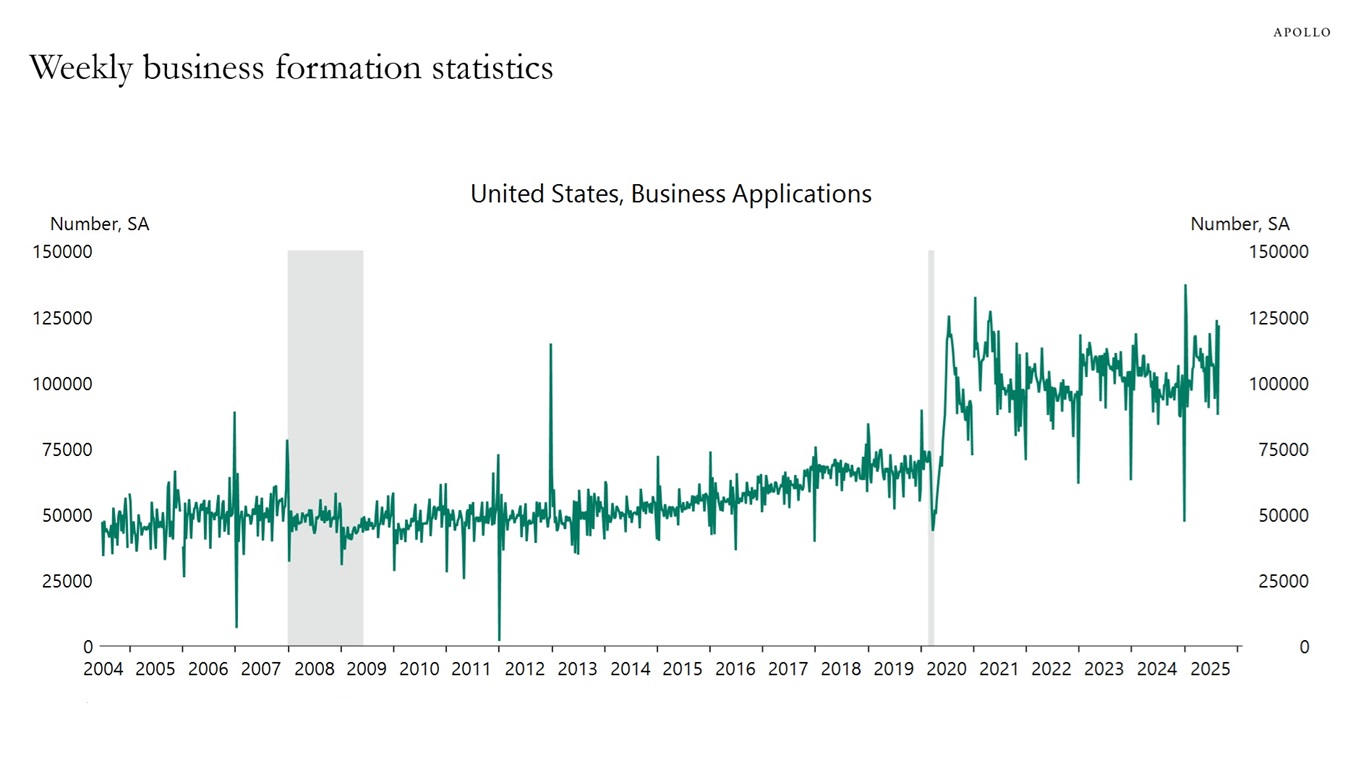
11) Weekly data for business formation is still strong

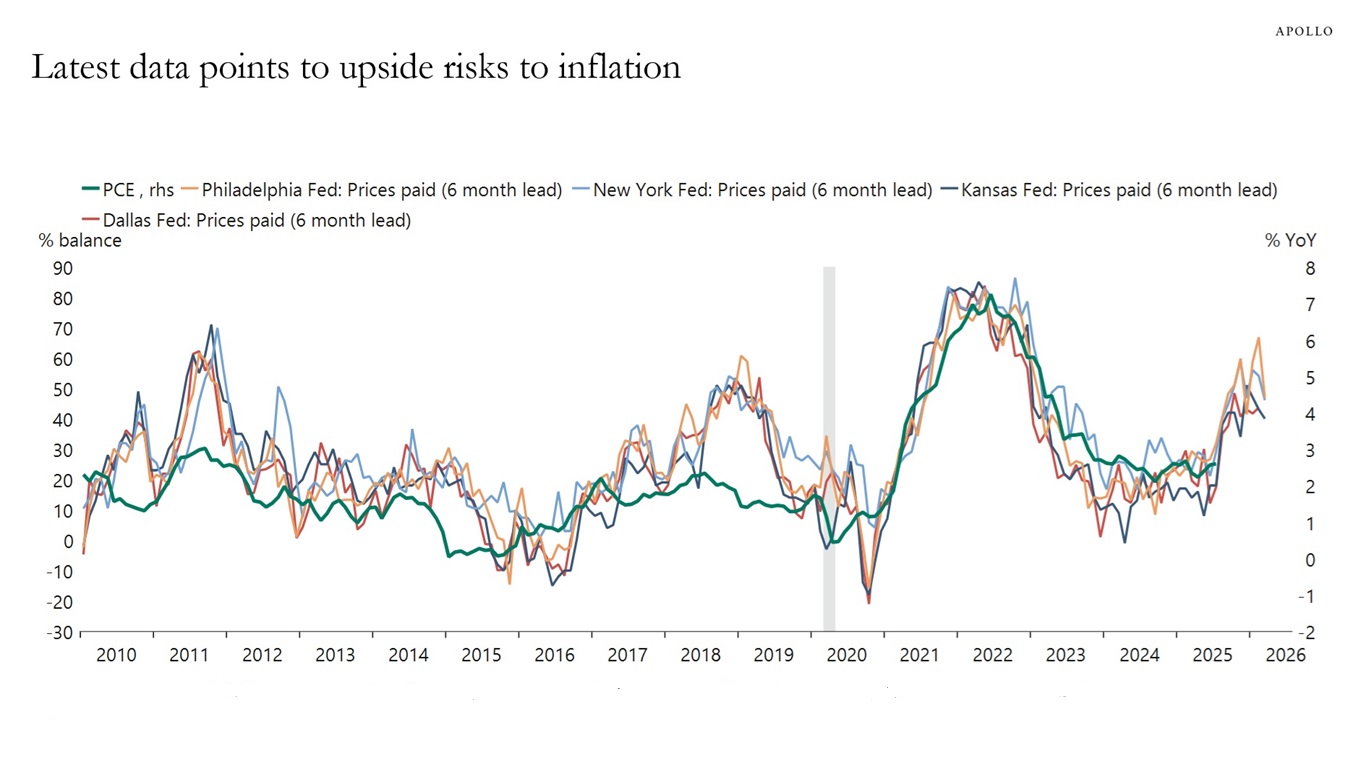
12) There are significant upside risks to inflation in the regional Fed surveys and in ISM services price paid

Combined with the Atlanta Fed expecting GDP growth in the third quarter at 3.9%, the bottom line is that the economy continues to do better than the consensus expects, and the labor market has likely weakened because of lower immigration and perhaps also AI implementation.

With continued strong growth and upside pressures on inflation from tariffs, immigration restrictions, and the declining dollar, the FOMC should really be talking about rate hikes rather than rate cuts.

Our chart book with high-frequency indicators for the US economy is available here.
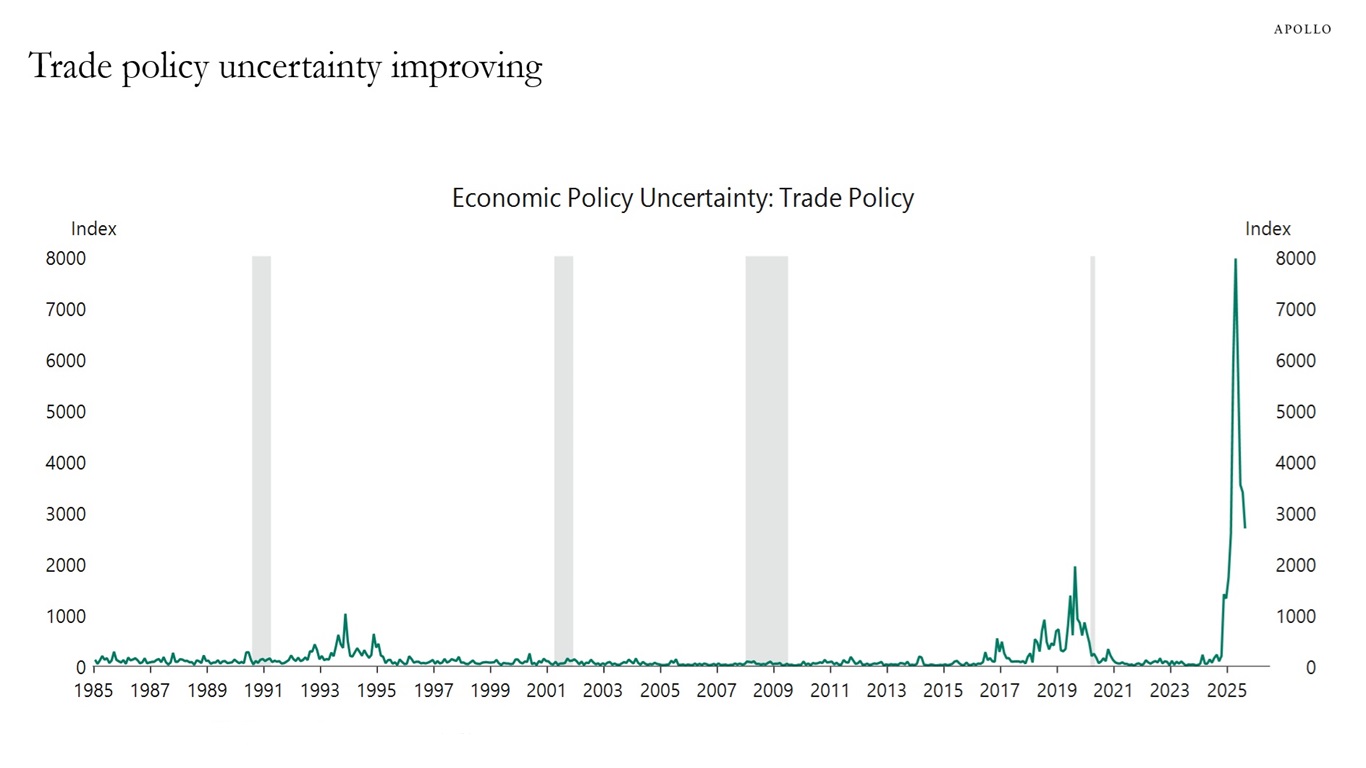
Trade policy uncertainty improving
Sources: Economic Policy Uncertainty, Macrobond, Apollo Chief Economist
Economic policy uncertainty improving
Sources: Economic Policy Uncertainty, Macrobond, Apollo Chief Economist
Consumer expectations to business conditions improving
Sources: Conference Board, Macrobond, Apollo Chief Economist
Consumers less worried about their jobs
Sources: Conference Board, Macrobond, Apollo Chief Economist
Corporate capex spending plans improving
Sources: National Federation of Independent Business, Federal Reserve Bank of Dallas, Federal Reserve Bank of Kansas City, Federal Reserve Bank of New York, Federal Reserve Bank of Philadelphia, Business Roundtable, Macrobond, Apollo Chief Economist
Daily data for US air travel
Sources: US Dept of Homeland Security, Macrobond, Apollo Chief Economist
Weekly movie theatre visits
Sources: Boxofficemojo.com, Apollo Chief Economist
Weekly data for same-store retail sales
Sources: Redbook Research Inc., Macrobond, Apollo Chief Economist
Weekly loan growth for banks
Sources: Federal Reserve, Macrobond, Apollo Chief Economist
Weekly bankruptcy filings
Note: Filings are for companies with more than $50 million in liabilities. For week ending on September 26, 2025. Sources: Bloomberg, Apollo Chief Economist
Weekly business formation statistics
Sources: US Census Bureau, Macrobond, Apollo Chief Economist
Latest data points to upside risks to inflation
Sources: Federal Reserve Bank of Dallas, Federal Reserve Bank of Kansas City, Federal Reserve Bank of New York, Federal Reserve Bank of Philadelphia, US Bureau of Economic Analysis (BEA), Macrobond, Apollo Chief Economist

Download high-res chart book


This presentation may not be distributed, transmitted or otherwise communicated to others in whole or in part without the express consent of Apollo Global Management, Inc. (together with its subsidiaries, “Apollo”).  

Apollo makes no representation or warranty, expressed or implied, with respect to the accuracy, reasonableness, or completeness of any of the statements made during this presentation, including, but not limited to, statements obtained from third parties. Opinions, estimates and projections constitute the current judgment of the speaker as of the date indicated. They do not necessarily reflect the views and opinions of Apollo and are subject to change at any time without notice. Apollo does not have any responsibility to update this presentation to account for such changes. There can be no assurance that any trends discussed during this presentation will continue.   

Statements made throughout this presentation are not intended to provide, and should not be relied upon for, accounting, legal or tax advice and do not constitute an investment recommendation or investment advice. Investors should make an independent investigation of the information discussed during this presentation, including consulting their tax, legal, accounting or other advisors about such information. Apollo does not act for you and is not responsible for providing you with the protections afforded to its clients. This presentation does not constitute an offer to sell, or the solicitation of an offer to buy, any security, product or service, including interest in any investment product or fund or account managed or advised by Apollo. 

Certain statements made throughout this presentation may be “forward-looking” in nature. Due to various risks and uncertainties, actual events or results may differ materially from those reflected or contemplated in such forward-looking information. As such, undue reliance should not be placed on such statements. Forward-looking statements may be identified by the use of terminology including, but not limited to, “may”, “will”, “should”, “expect”, “anticipate”, “target”, “project”, “estimate”, “intend”, “continue” or “believe” or the negatives thereof or other variations thereon or comparable terminology.