• Apollo.com
  • Login
  • Register Now
light site-logo
  • The Academy
  • Upcoming Events
        • Upcoming Events

        • 2026 OutlookTuesday, December 16, 2025 • 11:00am ET
  • Learning Center
        • New & UpdatedAlternative Investing Course 2.0

        • Alternative Investing Essentials Part OnePrivate Equity, Venture Capital, Private Credit
        • Alternative Investing Essentials Part TwoReal Estate, Infrastructure, Digital Assets, Hedge Funds
        • Practical ConsiderationsAsset Allocation, Risk Considerations, Fund Structures, Fees
        • Introductory Videos

          View All Videos

        •  Recent Classes & Videos

        • • Private Equity’s Edge: Delivering Alpha in a Changing Market
        • • Powering Innovation: Infrastructure Investing Across the AI Value Chain
        • • Mid-Year Outlook: At the Crossroads of Stagflation — What’s Next?
        • • Hybrid Investments: Flexible Structures for Volatile Times
        • • Private Credit Investing in Volatile Times
        • • Potential Implications of the Latest US Administration Policy Proposals
        • View All Classes

  • Alternative Perspectives
        • Investment Knowledge
        • The View from Apollo
          • Investment Knowledge

            Hybrid in Action: Delivering Bespoke Capital Solutions in a New Market Paradigm

            December 4, 2025
          • The View From Apollo

            Private Equity: Alpha in an Evolving Market

            November 24, 2025
          • Apollo Answers Investment Knowledge

            Apollo Answers: What’s Missing in Private Credit? Integrating Asset-Backed Finance

            October 27, 2025
  • The Daily Spark
        • Read The Daily Spark Blog


        • Want it delivered daily to your inbox?
          • The Daily Spark

            The US Retirement Crisis

            December 12, 2025
          • The Daily Spark

            Expected Returns in Public Equities Over the Coming Years

            December 11, 2025
          • The Daily Spark

            A Mystery in Fixed Income

            December 10, 2025
  • Register for Apollo Academy: Alternative Investing Course
  • Login
  • About Apollo Academy
  • Upcoming Events
  • Learning Center
  • Alternative Perspectives
  • The Daily Spark
  • Register for Apollo Academy: Alternative Investing Course
  • Login
  • 2026 Outlook
  • Alternative Investing Course 2.0
  • Private Equity’s Edge: Delivering Alpha in a Changing Market
  • Powering Innovation: Infrastructure Investing Across the AI Value Chain
  • Mid-Year Outlook: At the Crossroads of Stagflation — What’s Next?
  • Hybrid Investments: Flexible Structures for Volatile Times
  • Private Credit Investing in Volatile Times
  • Potential Implications of the Latest US Administration Policy Proposals
  • View All Classes
  • Introductory Videos
  • Alternative Investing Essentials Part One • Now Available On Demand
  • Alternative Investing Essentials Part Two • Now Available On Demand
  • Practical Considerations • Now Available On Demand
  • Investment Knowledge
  • The View from Apollo
Home July 2023

The Distribution of Mortgage Interest Rates Outstanding

Twenty-three percent of all mortgages outstanding have an interest rate below 3%, 38% are between 3% and 4%, and only 9% of all mortgages outstanding were originated with an interest rate above 6%, see the first chart.

The bottom line is that homeowners across America do not have any incentive to move and get a new mortgage with mortgage rates currently at 7.25%.

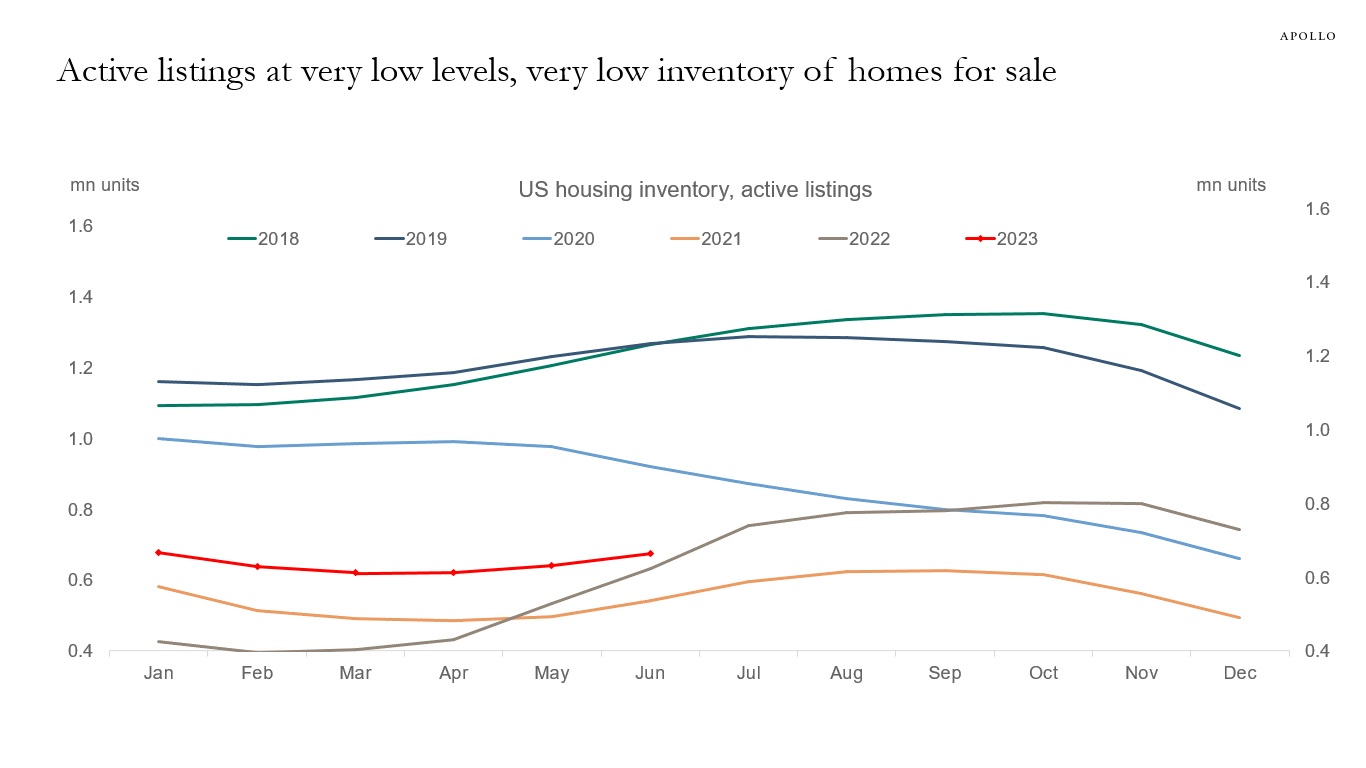
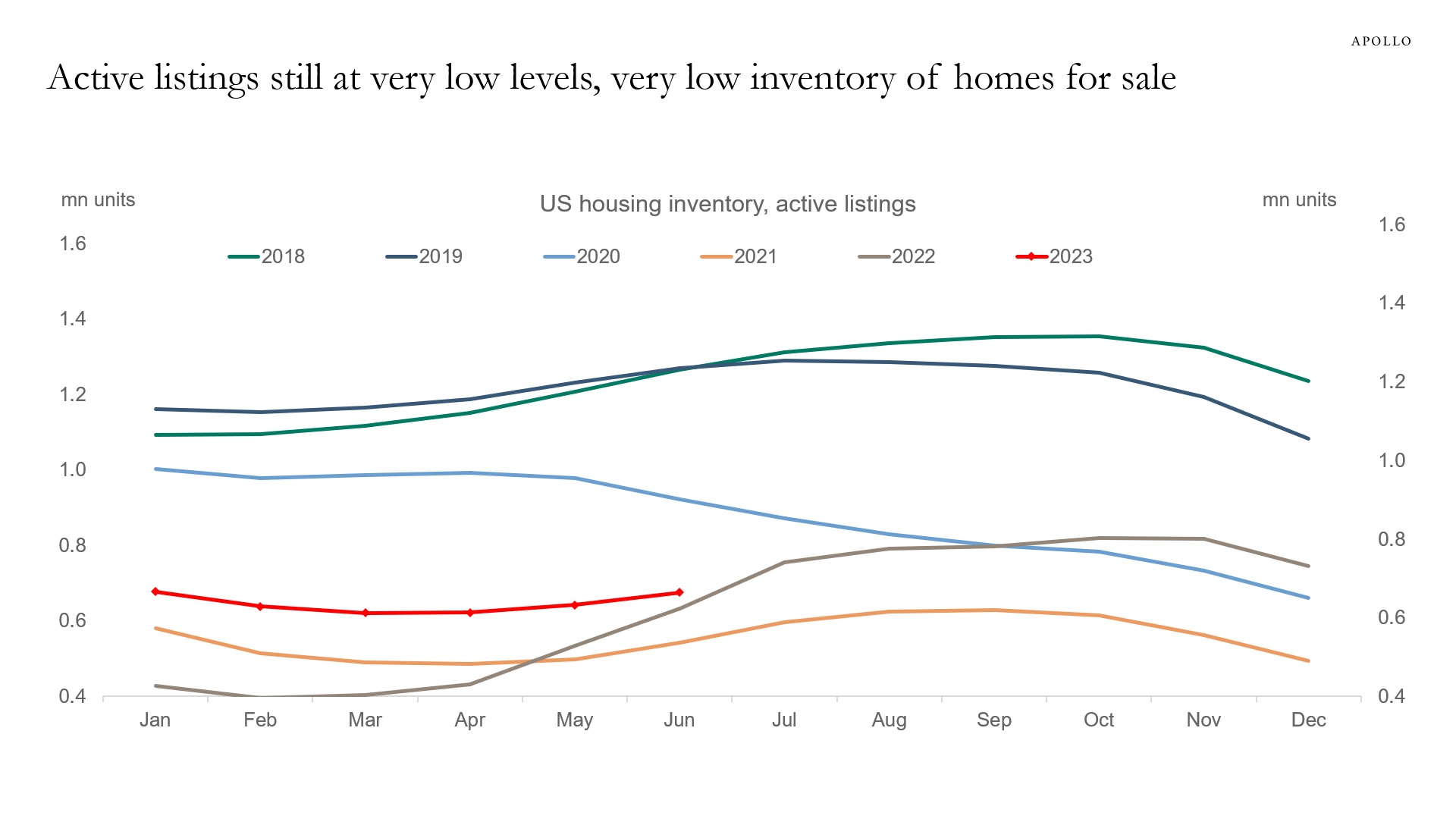
This is a key reason why the supply in the housing market continues to be so low, see the second chart.
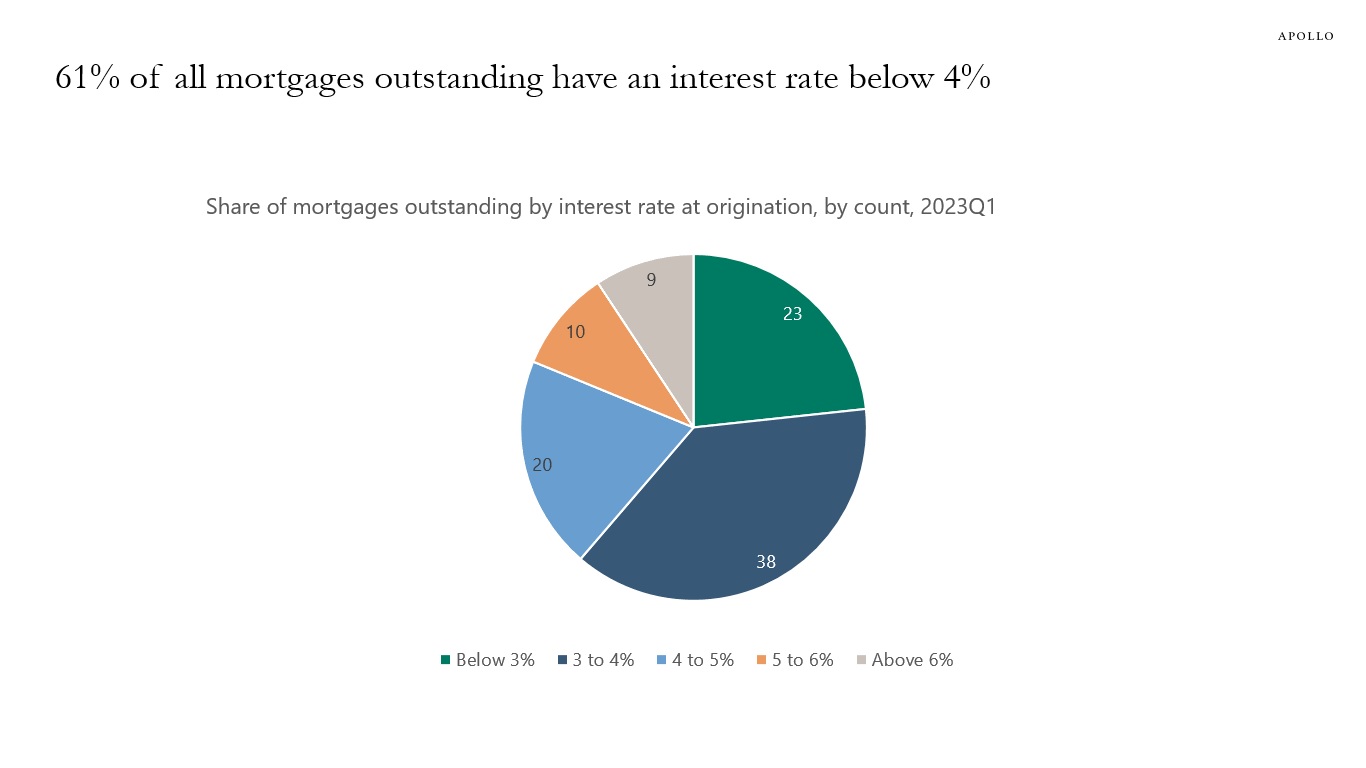
61% of all mortgages outstanding have an interest rate below 4%

Source: FHFA, Apollo Chief Economist
Active listings at very low levels, very low inventory of homes for sale
Source: Realtor.com, Apollo Chief Economist

Recent Posts

  • The US Retirement Crisis
  • Expected Returns in Public Equities Over the Coming Years
  • A Mystery in Fixed Income
  • More $1 Billion+ Deals in Private Markets
  • 40% of Small-Cap Companies Have No Earnings

Recent Comments

No comments to show.

Archives

  • December 2025
  • November 2025
  • October 2025
  • September 2025
  • August 2025
  • July 2025
  • June 2025
  • May 2025
  • April 2025
  • March 2025
  • February 2025
  • January 2025
  • December 2024
  • November 2024
  • October 2024
  • September 2024
  • August 2024
  • July 2024
  • June 2024
  • May 2024
  • April 2024
  • March 2024
  • February 2024
  • January 2024
  • December 2023
  • November 2023
  • October 2023
  • September 2023
  • August 2023
  • July 2023
  • June 2023
  • May 2023
  • April 2023
  • March 2023
  • February 2023
  • January 2023
  • December 2022
  • November 2022
  • October 2022
  • September 2022
  • August 2022
  • July 2022
  • June 2022
  • May 2022
  • April 2022
  • March 2022
  • February 2022
  • January 2022
  • December 2021
  • November 2021

Categories

  • Apollo Answers
  • Course Introductions
  • Economic Intelligence
  • Hide from Wordpress Search
  • Investment Knowledge
  • Perspectives
  • Redirecting
  • The Daily Spark
  • The View from Apollo
  • The Weekly Brief
  • Uncategorized
  • White Papers

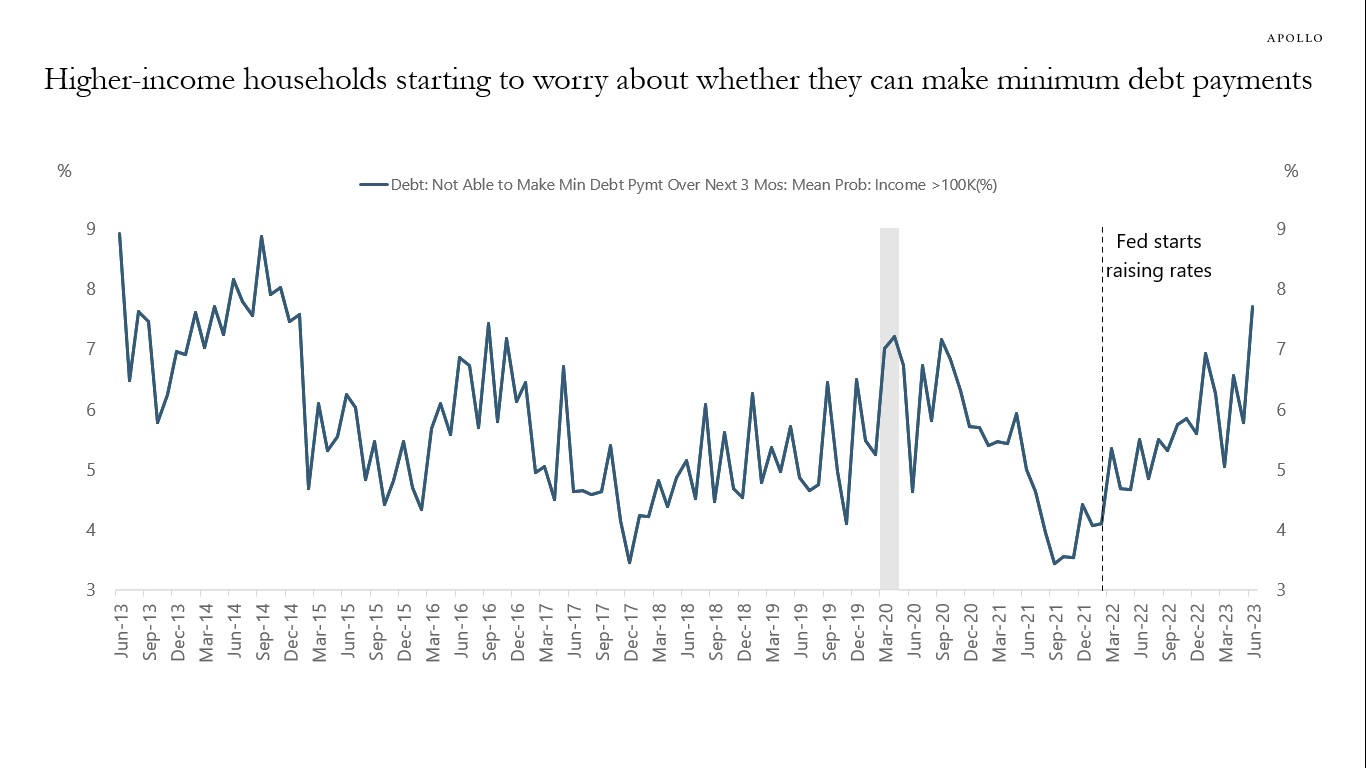
Fed Hikes Starting to Impact Higher-Income Households

The chart below shows the average probability of not being able to make minimum debt payments over the next three months for people earning more than $100,000. The bottom line is that higher-income households are starting to worry about their finances.

Higher-income households starting to worry about whether they can make minimum debt payments
Source: FRBNY, Haver Analytics, Apollo Chief Economist. Note: The data shows the average probability of not being able to make minimum debt payment over the next three months for people earning (income) greater than $100K.

Recent Posts

  • The US Retirement Crisis
  • Expected Returns in Public Equities Over the Coming Years
  • A Mystery in Fixed Income
  • More $1 Billion+ Deals in Private Markets
  • 40% of Small-Cap Companies Have No Earnings

Recent Comments

No comments to show.

Archives

  • December 2025
  • November 2025
  • October 2025
  • September 2025
  • August 2025
  • July 2025
  • June 2025
  • May 2025
  • April 2025
  • March 2025
  • February 2025
  • January 2025
  • December 2024
  • November 2024
  • October 2024
  • September 2024
  • August 2024
  • July 2024
  • June 2024
  • May 2024
  • April 2024
  • March 2024
  • February 2024
  • January 2024
  • December 2023
  • November 2023
  • October 2023
  • September 2023
  • August 2023
  • July 2023
  • June 2023
  • May 2023
  • April 2023
  • March 2023
  • February 2023
  • January 2023
  • December 2022
  • November 2022
  • October 2022
  • September 2022
  • August 2022
  • July 2022
  • June 2022
  • May 2022
  • April 2022
  • March 2022
  • February 2022
  • January 2022
  • December 2021
  • November 2021

Categories

  • Apollo Answers
  • Course Introductions
  • Economic Intelligence
  • Hide from Wordpress Search
  • Investment Knowledge
  • Perspectives
  • Redirecting
  • The Daily Spark
  • The View from Apollo
  • The Weekly Brief
  • Uncategorized
  • White Papers

The Monetary Policy Transmission Mechanism Takes 12 to 18 months

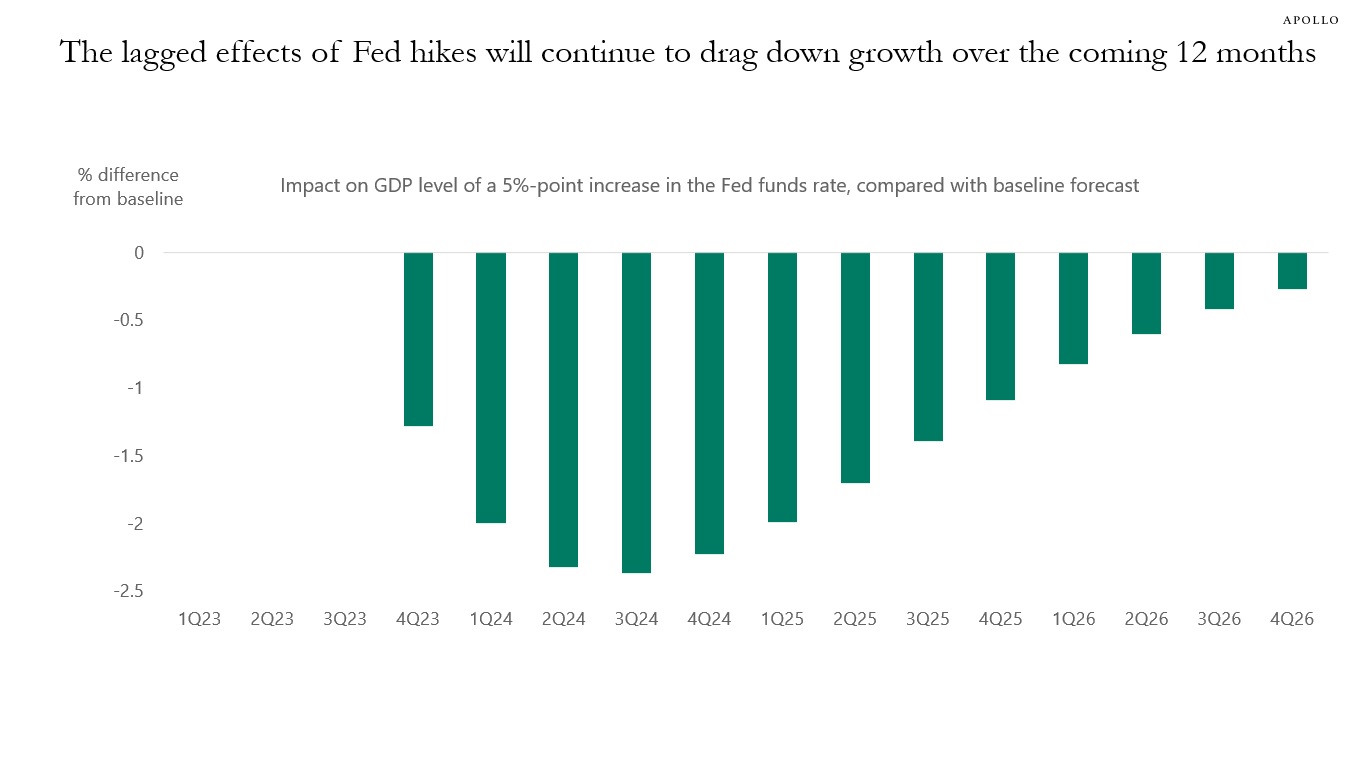
The Fed has raised the Fed funds rate to 5%, and the lagged effects of Fed hikes will continue to drag down growth over the coming 12 months. See chart below, which shows a simulation with the impact of a 5% increase in the Fed funds rate on the level of GDP done on a variant of the Fed’s FR/BUS model of the US economy.

In other words, the transmission mechanism of monetary policy takes time, and the drag on growth from lagged Fed hikes over the coming year will be significant. That is why a recession is a more likely outcome than a soft landing, no matter what happens to inflation. 

The lagged effects of Fed hikes will continue to drag down growth over the coming 12 months
Source: Bloomberg, Apollo Chief Economist. Note: 500bps monetary policy shock in 3Q23.

Recent Posts

  • The US Retirement Crisis
  • Expected Returns in Public Equities Over the Coming Years
  • A Mystery in Fixed Income
  • More $1 Billion+ Deals in Private Markets
  • 40% of Small-Cap Companies Have No Earnings

Recent Comments

No comments to show.

Archives

  • December 2025
  • November 2025
  • October 2025
  • September 2025
  • August 2025
  • July 2025
  • June 2025
  • May 2025
  • April 2025
  • March 2025
  • February 2025
  • January 2025
  • December 2024
  • November 2024
  • October 2024
  • September 2024
  • August 2024
  • July 2024
  • June 2024
  • May 2024
  • April 2024
  • March 2024
  • February 2024
  • January 2024
  • December 2023
  • November 2023
  • October 2023
  • September 2023
  • August 2023
  • July 2023
  • June 2023
  • May 2023
  • April 2023
  • March 2023
  • February 2023
  • January 2023
  • December 2022
  • November 2022
  • October 2022
  • September 2022
  • August 2022
  • July 2022
  • June 2022
  • May 2022
  • April 2022
  • March 2022
  • February 2022
  • January 2022
  • December 2021
  • November 2021

Categories

  • Apollo Answers
  • Course Introductions
  • Economic Intelligence
  • Hide from Wordpress Search
  • Investment Knowledge
  • Perspectives
  • Redirecting
  • The Daily Spark
  • The View from Apollo
  • The Weekly Brief
  • Uncategorized
  • White Papers

The Flawed Logic in the Current Market Narrative

The market seems to be of the view that if inflation quickly declines to the Fed’s 2% target, then everything will be fine and stocks will continue to go up, and credit spreads will continue to narrow.

There are two problems with this logic.

1) If inflation comes down faster than the Fed expects, it is because the economy is slowing faster than the Fed expects. For example, if wholesale car prices decline more quickly than expected, then it is driven by a sharper-than-expected drop-off in demand for cars.

2) The Fed and academics agree that it takes 12 to 18 months before monetary policy impacts the economy, and this is true both when the Fed is raising rates and when they are cutting rates. So if inflation quickly declines to 2%, we would still have 12 to 18 months of slowing growth ahead of us. 

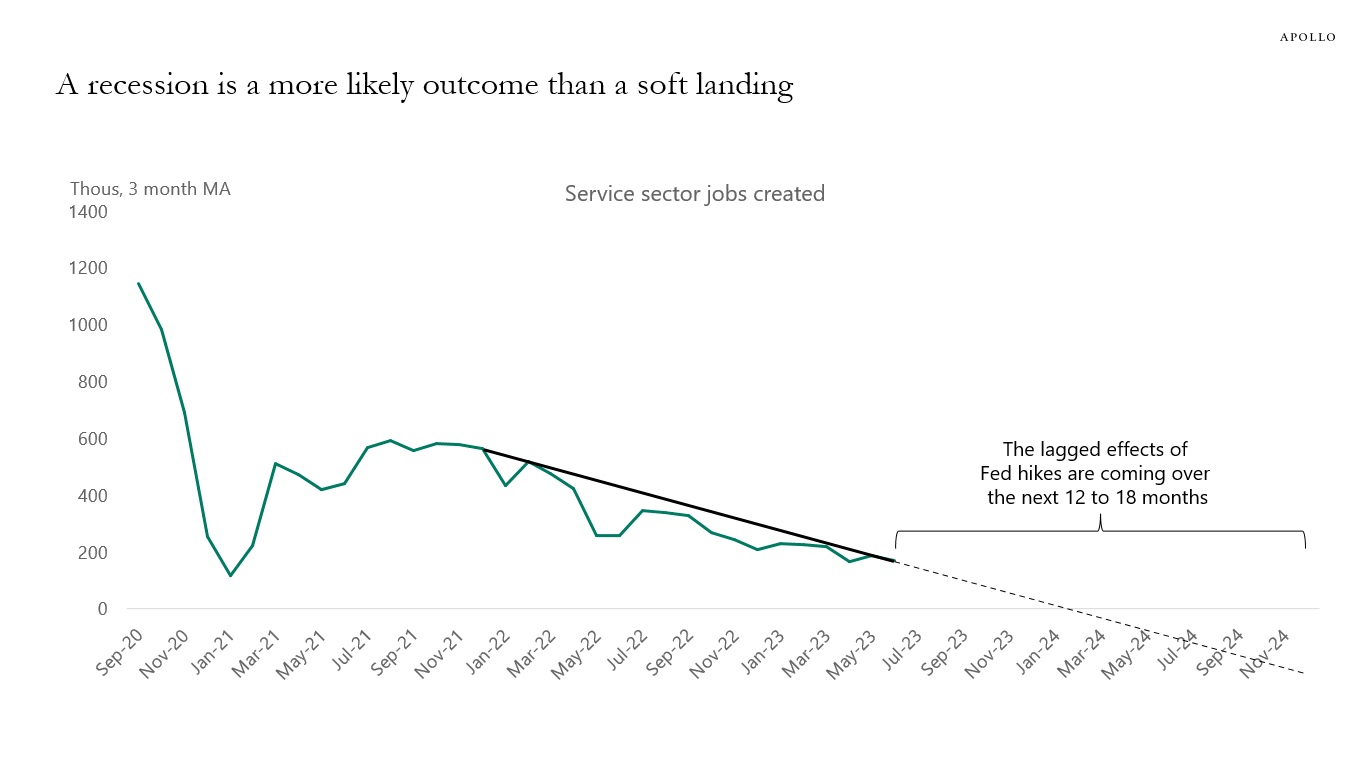
The bottom line is that no matter what happens to inflation, the lagged effects of Fed hikes will continue to drag the economy down over the coming 12 to 18 months, and that is why a recession is a more likely outcome than a soft landing, see chart below.

A recession is a more likely outcome than a soft landing
Source: BLS, Haver Analytics, Apollo Chief Economist

Recent Posts

  • The US Retirement Crisis
  • Expected Returns in Public Equities Over the Coming Years
  • A Mystery in Fixed Income
  • More $1 Billion+ Deals in Private Markets
  • 40% of Small-Cap Companies Have No Earnings

Recent Comments

No comments to show.

Archives

  • December 2025
  • November 2025
  • October 2025
  • September 2025
  • August 2025
  • July 2025
  • June 2025
  • May 2025
  • April 2025
  • March 2025
  • February 2025
  • January 2025
  • December 2024
  • November 2024
  • October 2024
  • September 2024
  • August 2024
  • July 2024
  • June 2024
  • May 2024
  • April 2024
  • March 2024
  • February 2024
  • January 2024
  • December 2023
  • November 2023
  • October 2023
  • September 2023
  • August 2023
  • July 2023
  • June 2023
  • May 2023
  • April 2023
  • March 2023
  • February 2023
  • January 2023
  • December 2022
  • November 2022
  • October 2022
  • September 2022
  • August 2022
  • July 2022
  • June 2022
  • May 2022
  • April 2022
  • March 2022
  • February 2022
  • January 2022
  • December 2021
  • November 2021

Categories

  • Apollo Answers
  • Course Introductions
  • Economic Intelligence
  • Hide from Wordpress Search
  • Investment Knowledge
  • Perspectives
  • Redirecting
  • The Daily Spark
  • The View from Apollo
  • The Weekly Brief
  • Uncategorized
  • White Papers

London Tube and NYC Subway Usage

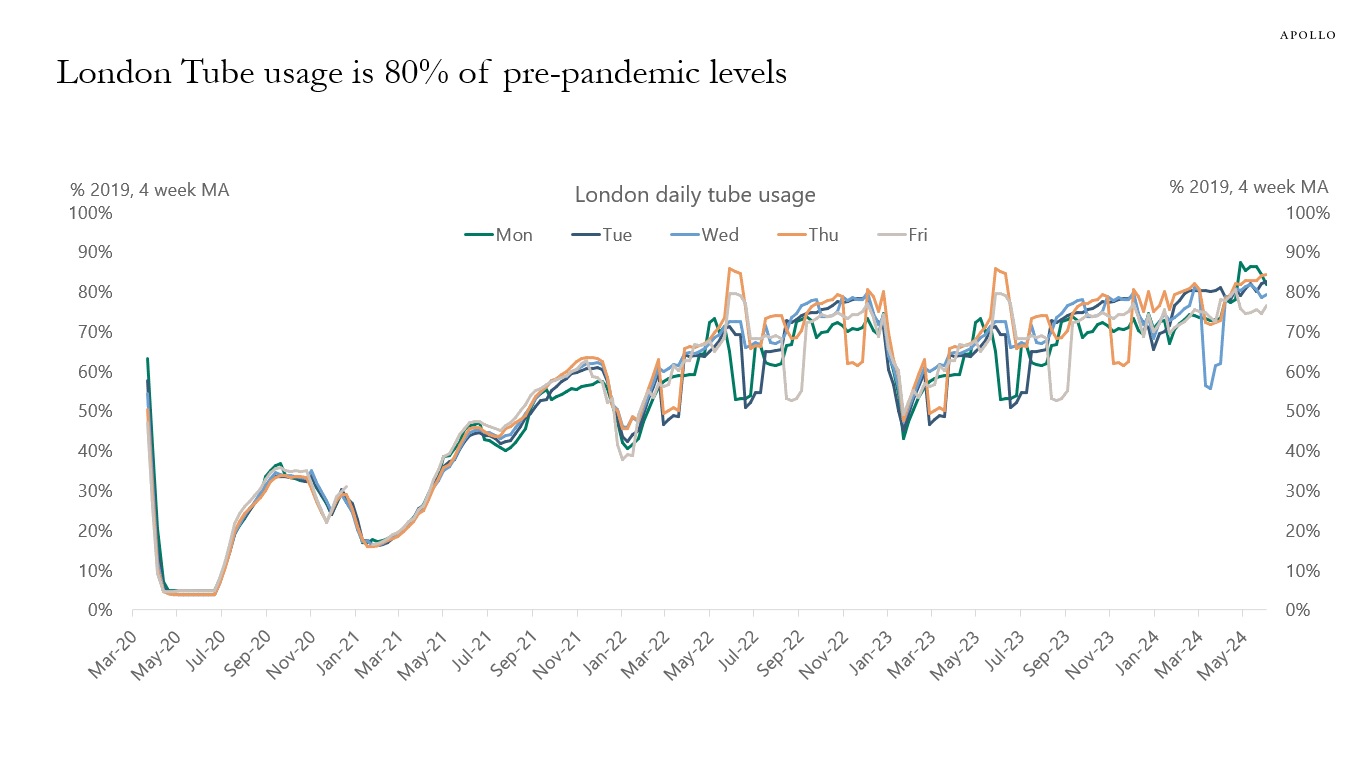
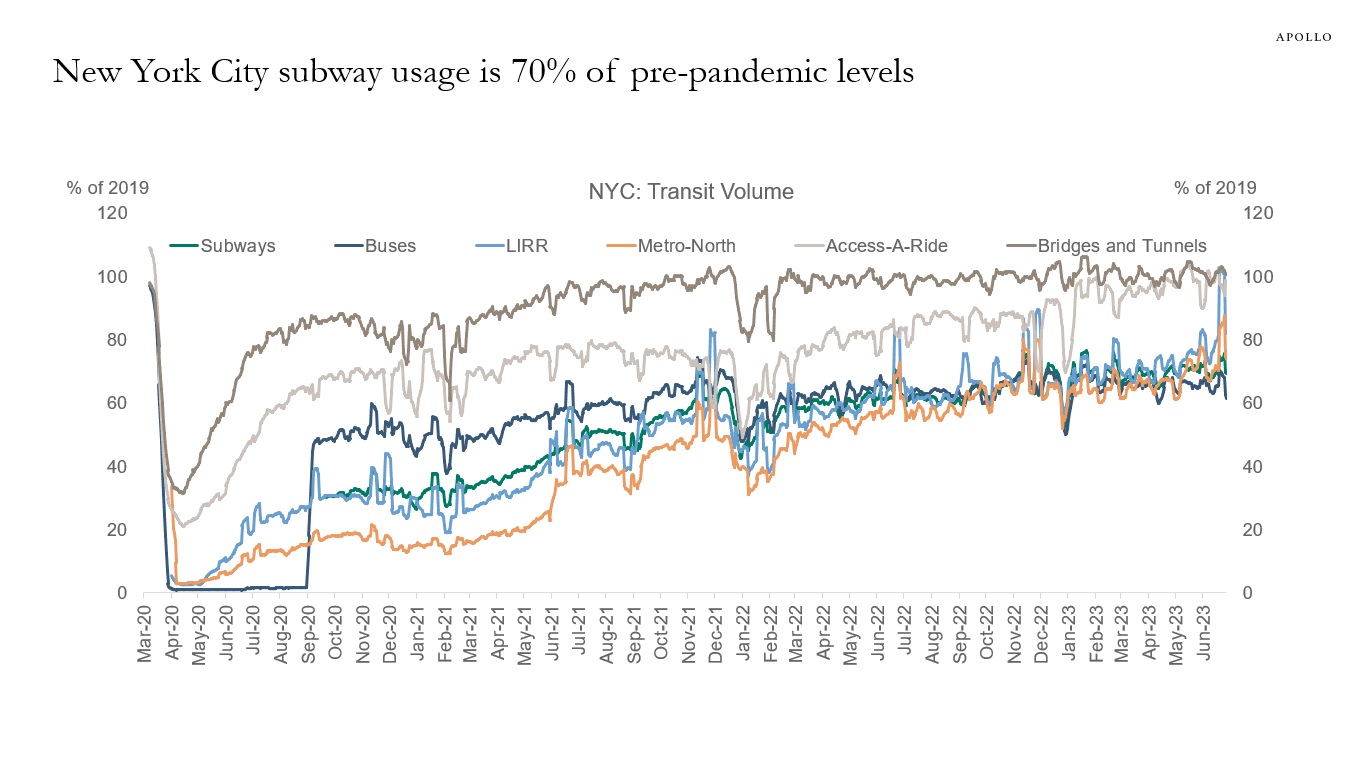
Both London and New York are seeing a gradual move back towards normal. London underground usage is 80% of pre-pandemic levels, and New York City subway usage is 70%, see charts below. The rising trends in these charts bode well for a recovery over time in office, retail, and commercial real estate more broadly.

London Tube usage is 80% of pre-pandemic levels
Source: ONS, TfL, Apollo Chief Economist
New York City subway usage is 70% of pre-pandemic levels
Source: MTA, Apollo Chief Economist
Recent Posts

  • The US Retirement Crisis
  • Expected Returns in Public Equities Over the Coming Years
  • A Mystery in Fixed Income
  • More $1 Billion+ Deals in Private Markets
  • 40% of Small-Cap Companies Have No Earnings

Recent Comments

No comments to show.

Archives

  • December 2025
  • November 2025
  • October 2025
  • September 2025
  • August 2025
  • July 2025
  • June 2025
  • May 2025
  • April 2025
  • March 2025
  • February 2025
  • January 2025
  • December 2024
  • November 2024
  • October 2024
  • September 2024
  • August 2024
  • July 2024
  • June 2024
  • May 2024
  • April 2024
  • March 2024
  • February 2024
  • January 2024
  • December 2023
  • November 2023
  • October 2023
  • September 2023
  • August 2023
  • July 2023
  • June 2023
  • May 2023
  • April 2023
  • March 2023
  • February 2023
  • January 2023
  • December 2022
  • November 2022
  • October 2022
  • September 2022
  • August 2022
  • July 2022
  • June 2022
  • May 2022
  • April 2022
  • March 2022
  • February 2022
  • January 2022
  • December 2021
  • November 2021

Categories

  • Apollo Answers
  • Course Introductions
  • Economic Intelligence
  • Hide from Wordpress Search
  • Investment Knowledge
  • Perspectives
  • Redirecting
  • The Daily Spark
  • The View from Apollo
  • The Weekly Brief
  • Uncategorized
  • White Papers

Gradual Cooling

The main message from June’s employment report released on Friday is that the US economy is gradually slowing down. However, it’s still not happening at the pace needed to get inflation under control. In fact, we’re actually seeing a pickup in wage inflation for certain occupations. This week, the consensus expects core CPI inflation to come in at 5%, which is far above the Federal Reserve’s 2% target. Against this backdrop, we can expect the Fed to keep rates elevated for the foreseeable future, which could raise the risk of a hard landing.


This presentation may not be distributed, transmitted or otherwise communicated to others in whole or in part without the express consent of Apollo Global Management, Inc. (together with its subsidiaries, “Apollo”).  

Apollo makes no representation or warranty, expressed or implied, with respect to the accuracy, reasonableness, or completeness of any of the statements made during this presentation, including, but not limited to, statements obtained from third parties. Opinions, estimates and projections constitute the current judgment of the speaker as of the date indicated. They do not necessarily reflect the views and opinions of Apollo and are subject to change at any time without notice. Apollo does not have any responsibility to update this presentation to account for such changes. There can be no assurance that any trends discussed during this presentation will continue.   

Statements made throughout this presentation are not intended to provide, and should not be relied upon for, accounting, legal or tax advice and do not constitute an investment recommendation or investment advice. Investors should make an independent investigation of the information discussed during this presentation, including consulting their tax, legal, accounting or other advisors about such information. Apollo does not act for you and is not responsible for providing you with the protections afforded to its clients. This presentation does not constitute an offer to sell, or the solicitation of an offer to buy, any security, product or service, including interest in any investment product or fund or account managed or advised by Apollo. 

Certain statements made throughout this presentation may be “forward-looking” in nature. Due to various risks and uncertainties, actual events or results may differ materially from those reflected or contemplated in such forward-looking information. As such, undue reliance should not be placed on such statements. Forward-looking statements may be identified by the use of terminology including, but not limited to, “may”, “will”, “should”, “expect”, “anticipate”, “target”, “project”, “estimate”, “intend”, “continue” or “believe” or the negatives thereof or other variations thereon or comparable terminology.

Recent Posts

  • The US Retirement Crisis
  • Expected Returns in Public Equities Over the Coming Years
  • A Mystery in Fixed Income
  • More $1 Billion+ Deals in Private Markets
  • 40% of Small-Cap Companies Have No Earnings

Recent Comments

No comments to show.

Archives

  • December 2025
  • November 2025
  • October 2025
  • September 2025
  • August 2025
  • July 2025
  • June 2025
  • May 2025
  • April 2025
  • March 2025
  • February 2025
  • January 2025
  • December 2024
  • November 2024
  • October 2024
  • September 2024
  • August 2024
  • July 2024
  • June 2024
  • May 2024
  • April 2024
  • March 2024
  • February 2024
  • January 2024
  • December 2023
  • November 2023
  • October 2023
  • September 2023
  • August 2023
  • July 2023
  • June 2023
  • May 2023
  • April 2023
  • March 2023
  • February 2023
  • January 2023
  • December 2022
  • November 2022
  • October 2022
  • September 2022
  • August 2022
  • July 2022
  • June 2022
  • May 2022
  • April 2022
  • March 2022
  • February 2022
  • January 2022
  • December 2021
  • November 2021

Categories

  • Apollo Answers
  • Course Introductions
  • Economic Intelligence
  • Hide from Wordpress Search
  • Investment Knowledge
  • Perspectives
  • Redirecting
  • The Daily Spark
  • The View from Apollo
  • The Weekly Brief
  • Uncategorized
  • White Papers

Credit Market Outlook

High rates and a slowing economy are creating opportunities for credit investors. Our latest credit market outlook is available here, key charts inserted below.

Credit market outlook: High rates and slowing economy creating opportunities for credit investors
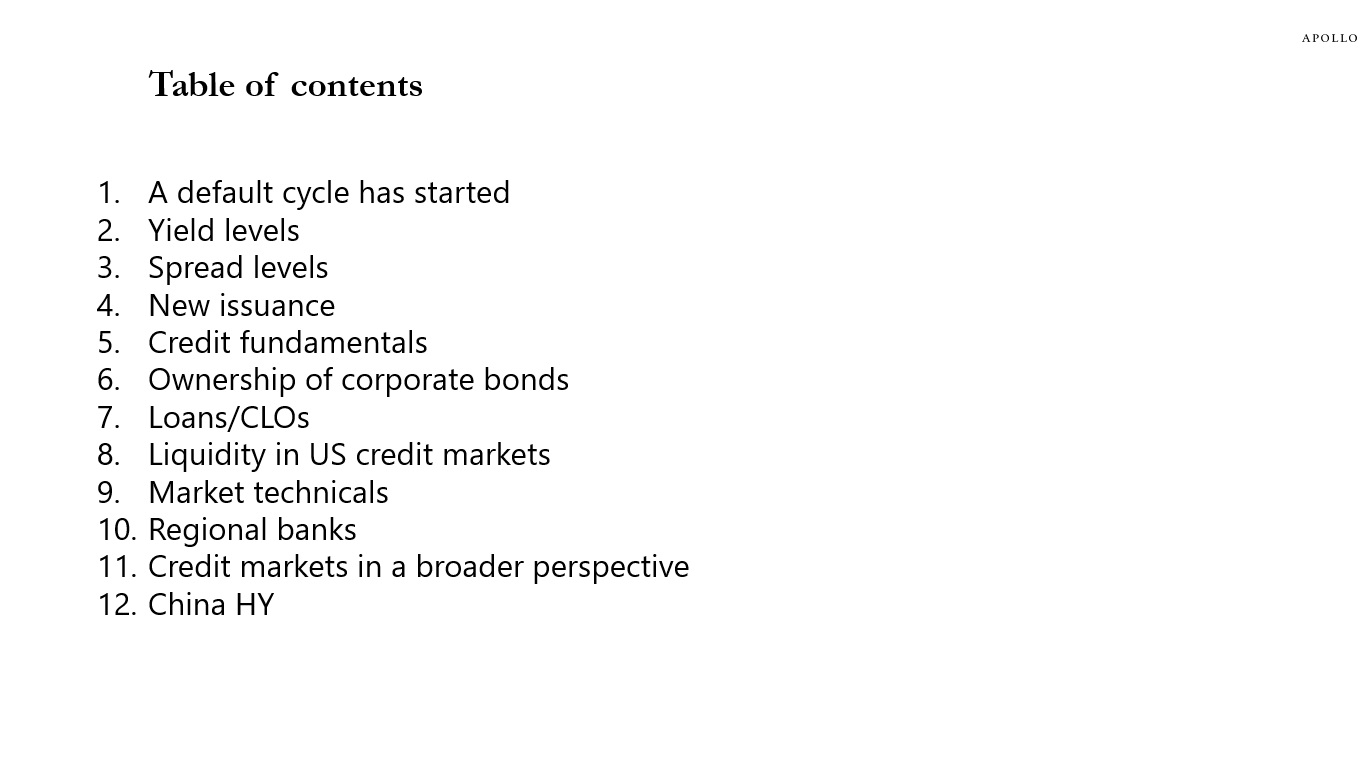
Table of contents
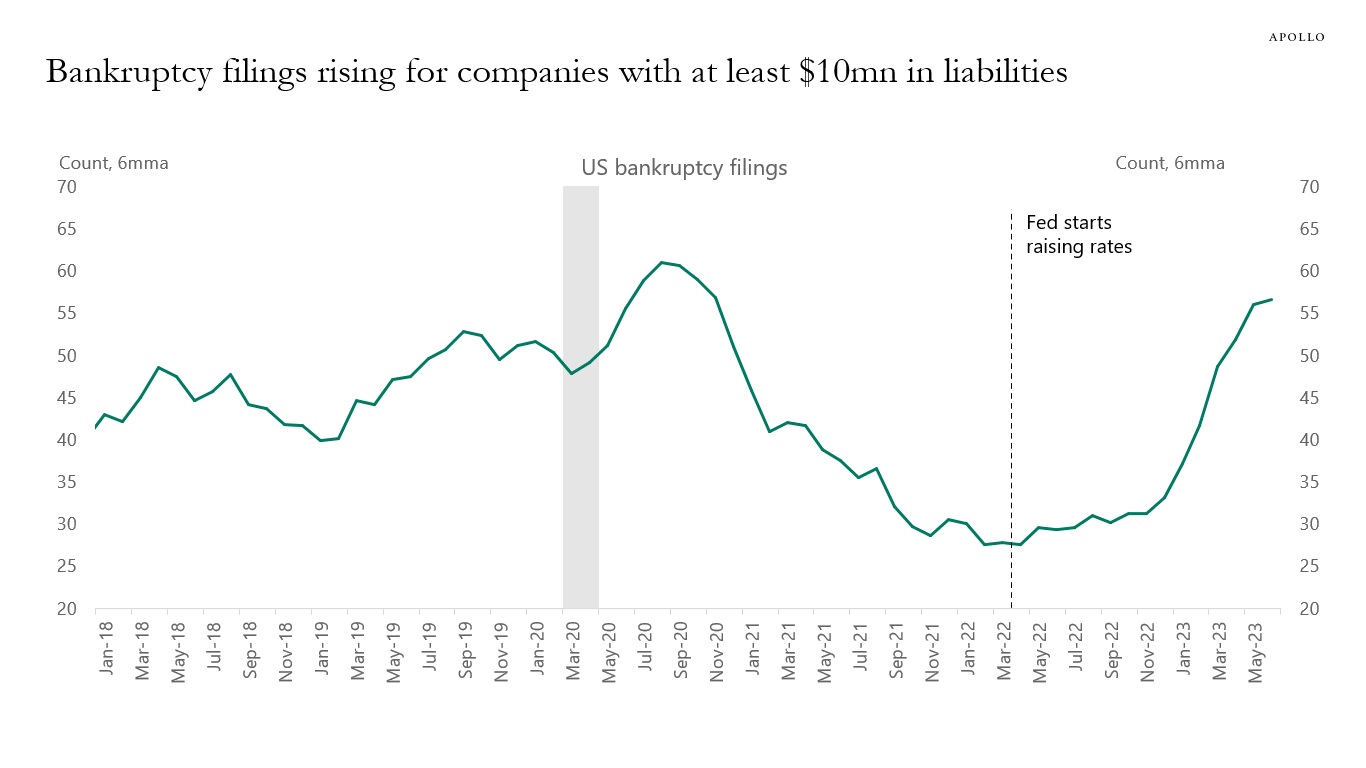
Bankruptcy filings rising for companies with at least $10mn in liabilities
Source: S&P Capital IQ, Bloomberg, Apollo Chief Economist. Note: Bankruptcy figures include public companies or private companies with public debt with a minimum of $2 million in assets or liabilities at the time of filing, in addition to private companies with at least $10 million in assets or liabilities.
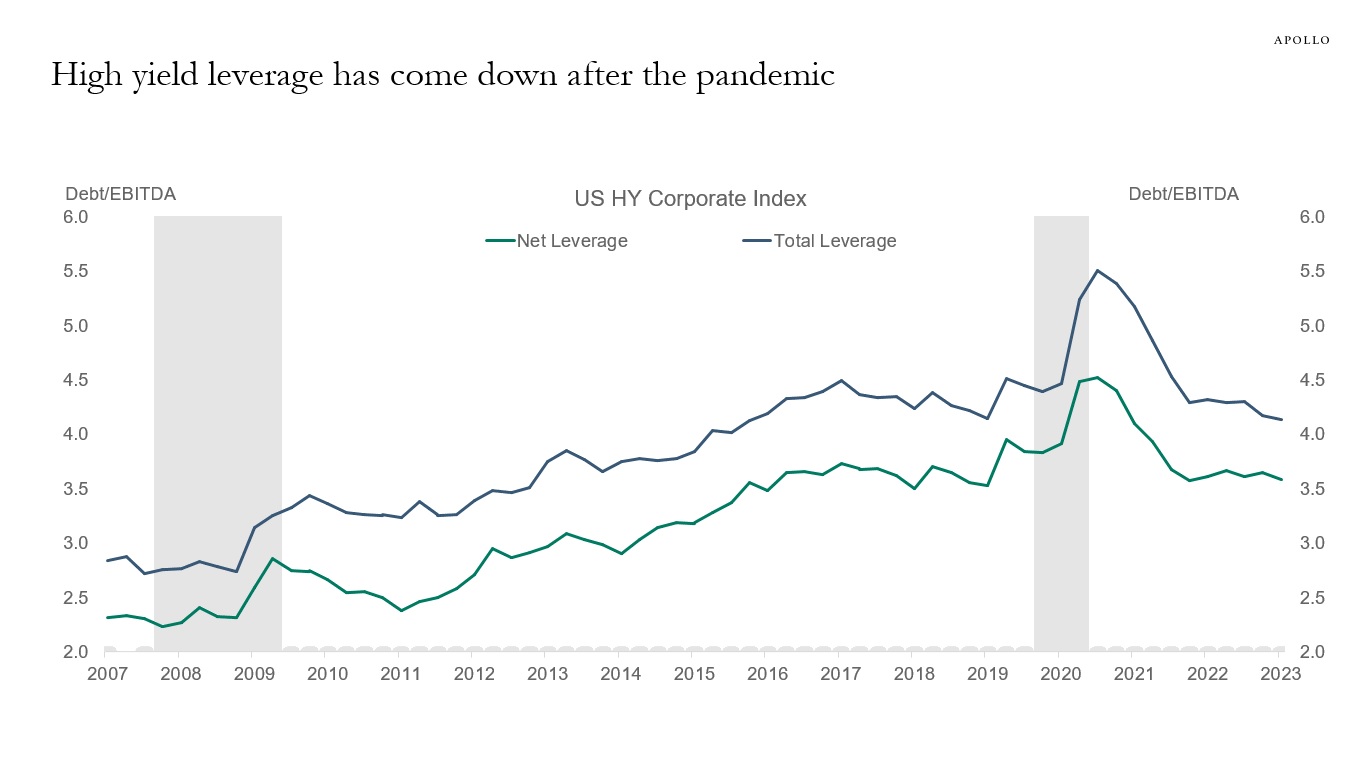
High yield leverage has come down after the pandemic
Source: Bloomberg, Apollo Chief Economist. Note: Median leverage for the bonds in H0A0 index.
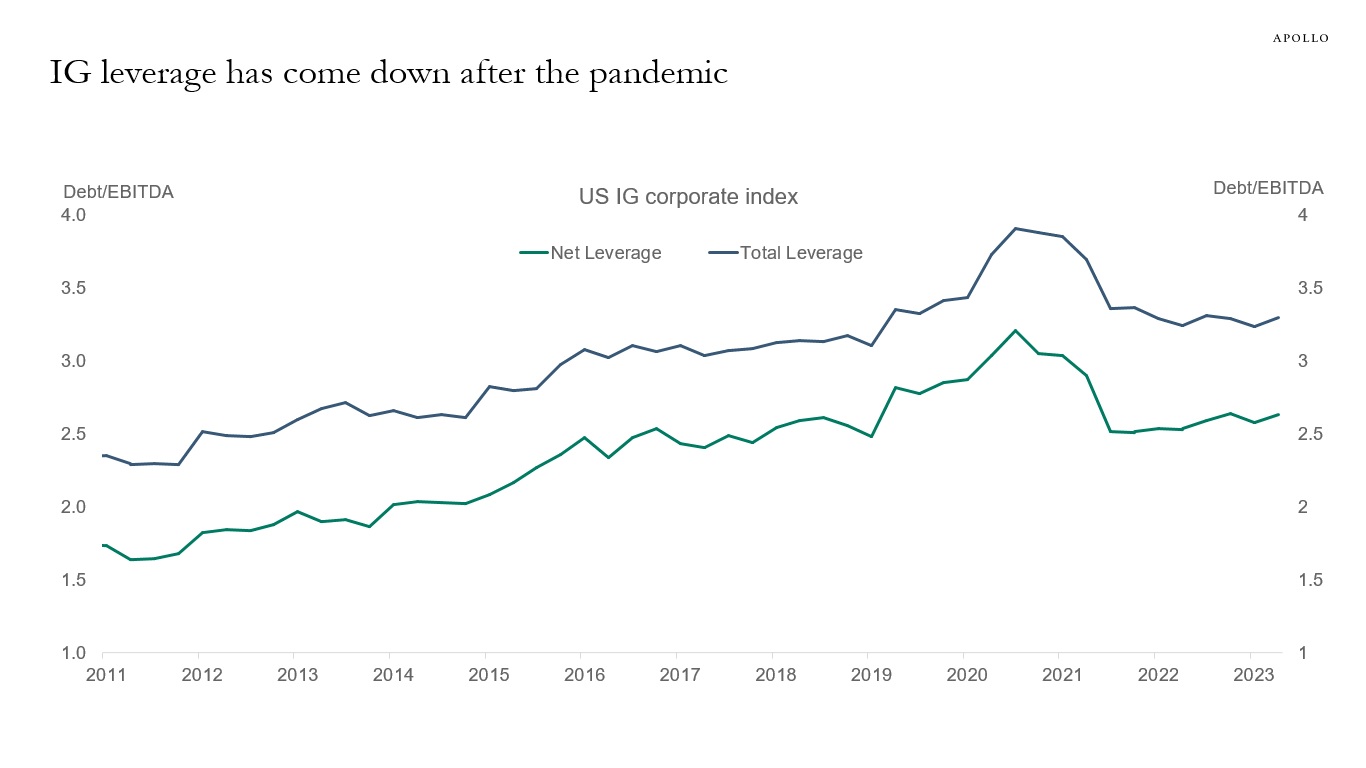
IG leverage has come down after the pandemic
Source: ICE BofA, Bloomberg, Apollo Chief Economist. Note: Index used C0A0 Index.
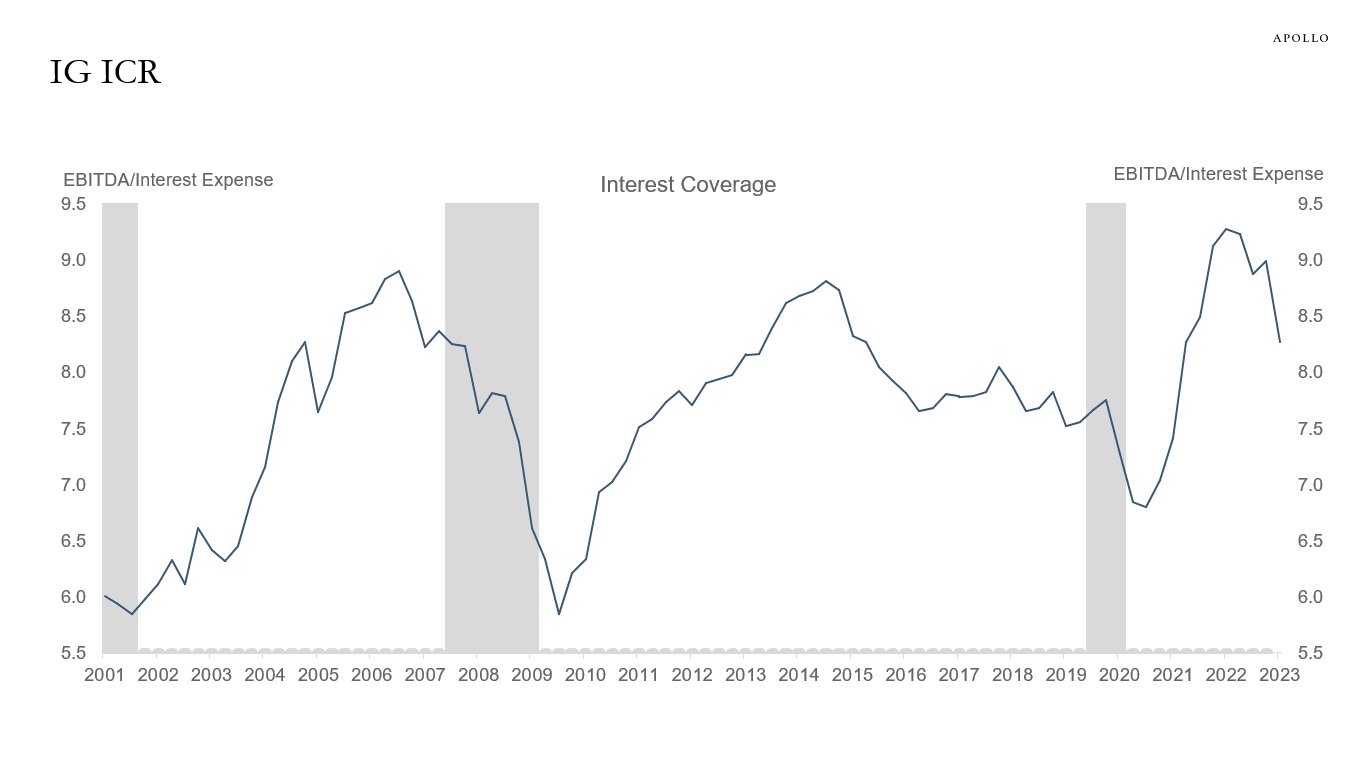
IG ICR
Source: Bloomberg, Apollo Chief Economist
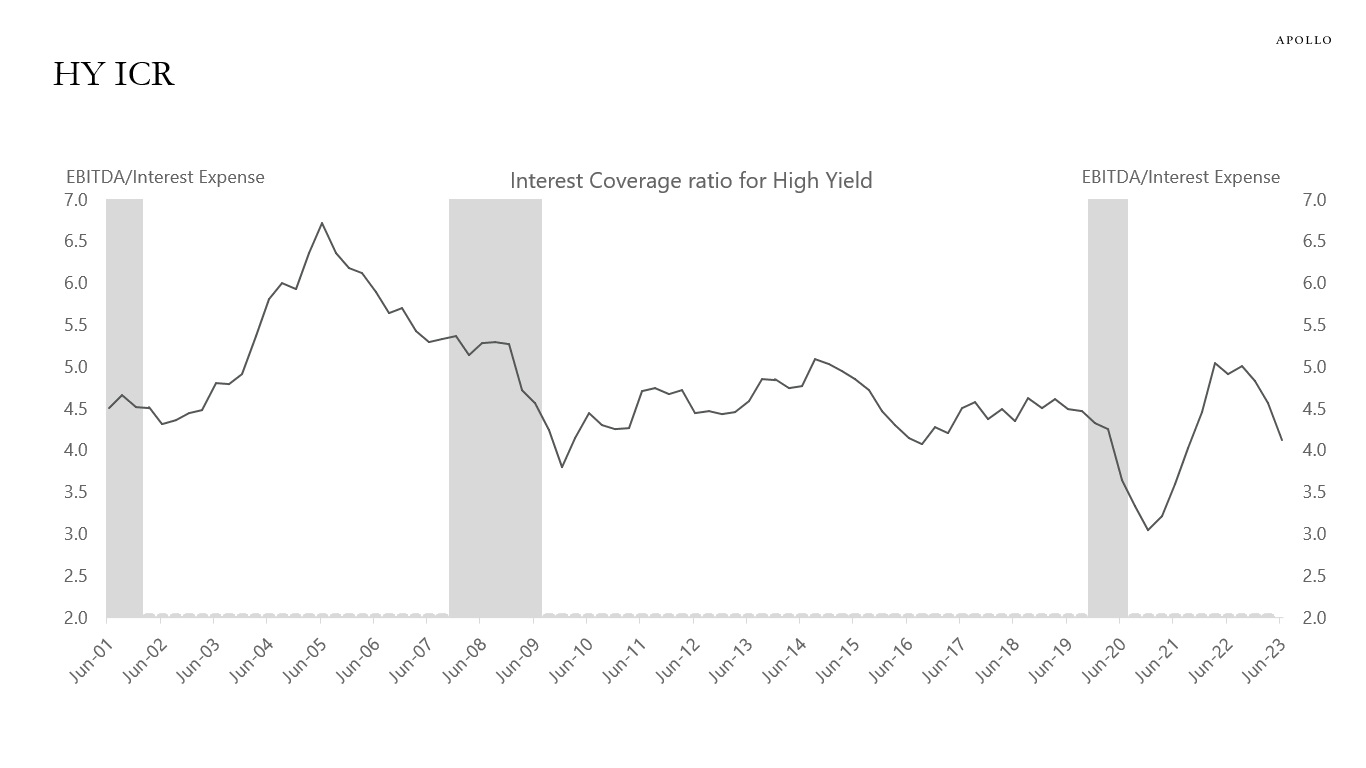
HY ICR
Source: Bloomberg, Apollo Chief Economist
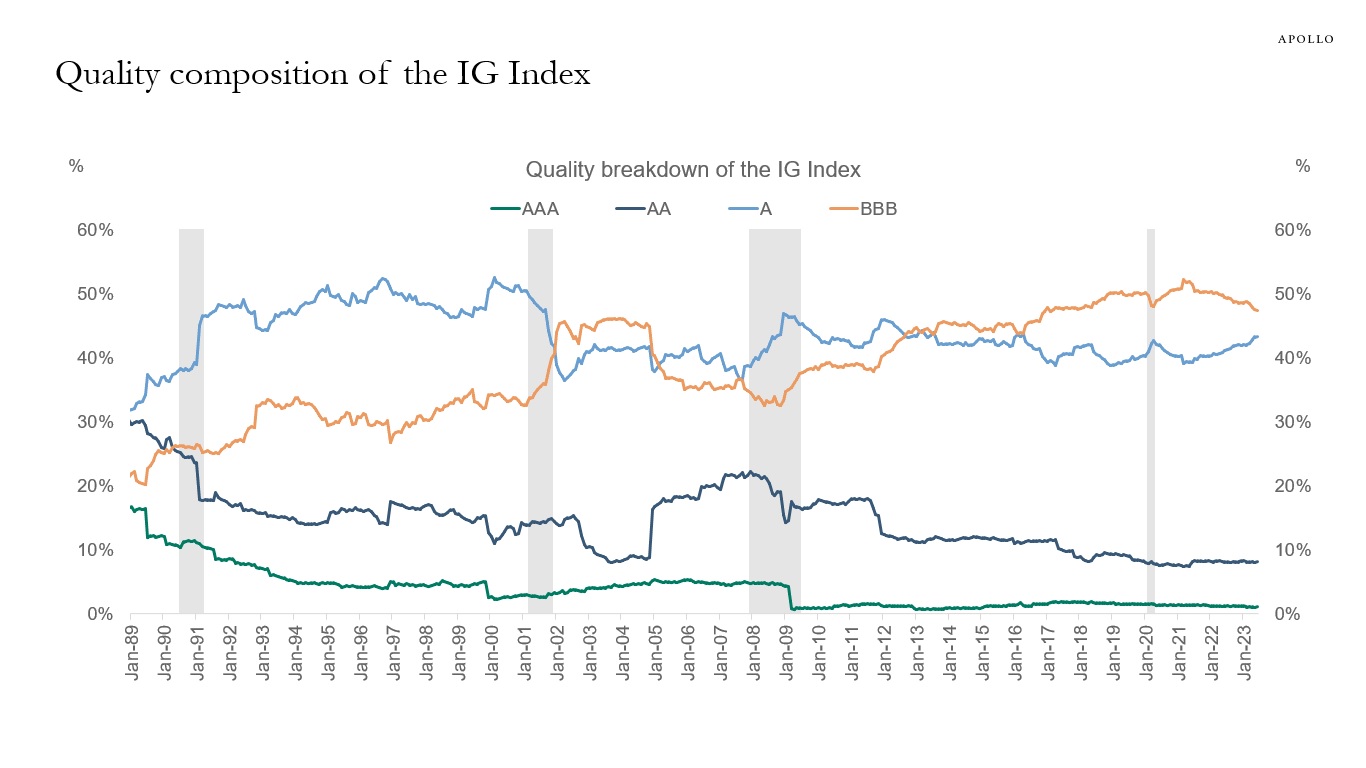
Quality composition of the IG Index
Source: ICE BofA, Bloomberg, Apollo Chief Economist. Note: Breakdown by market value. Data as of June 30, 2023.
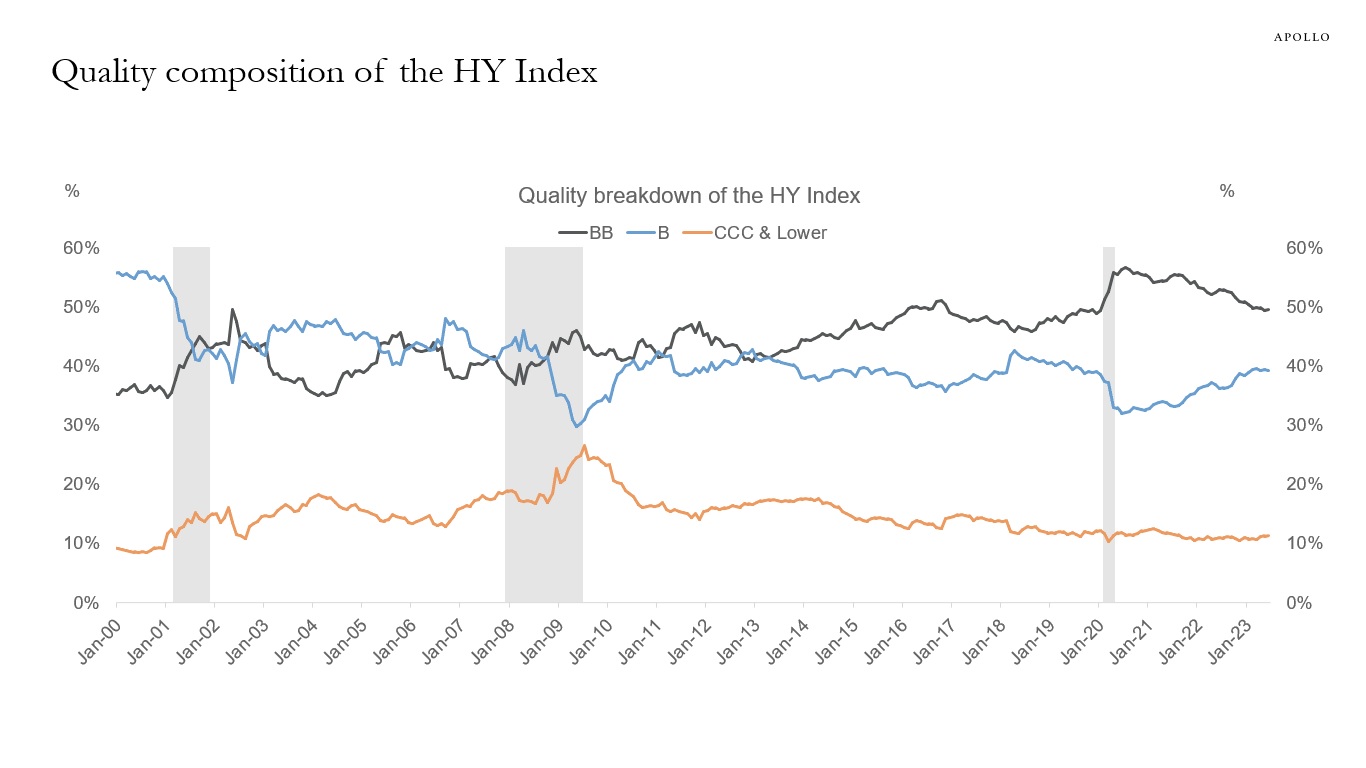
Quality composition of the HY Index
Source: ICE BofA, Bloomberg, Apollo Chief Economist. Note: Breakdown by market value. Data as of June 30, 2023.
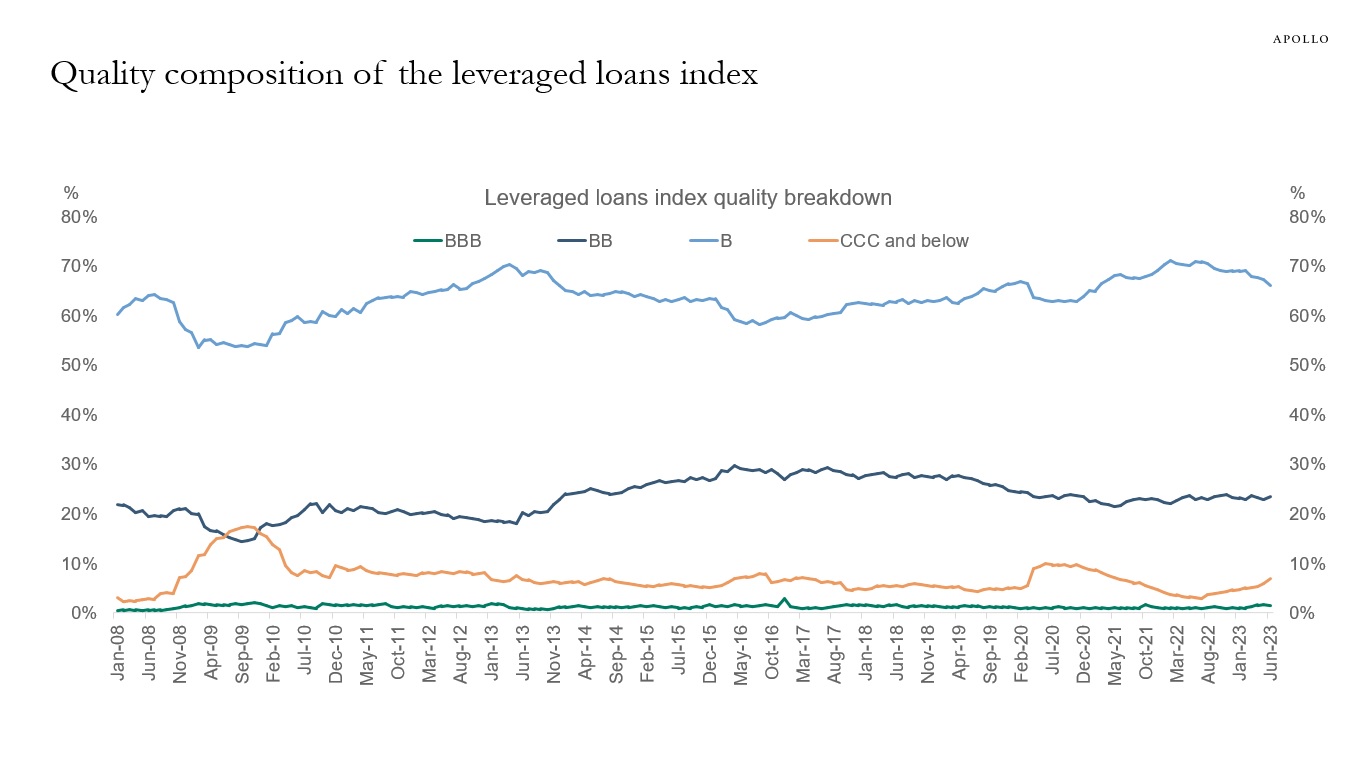
Quality composition of the leveraged loans index
Source: Pitchbook LCD, Apollo Chief Economist
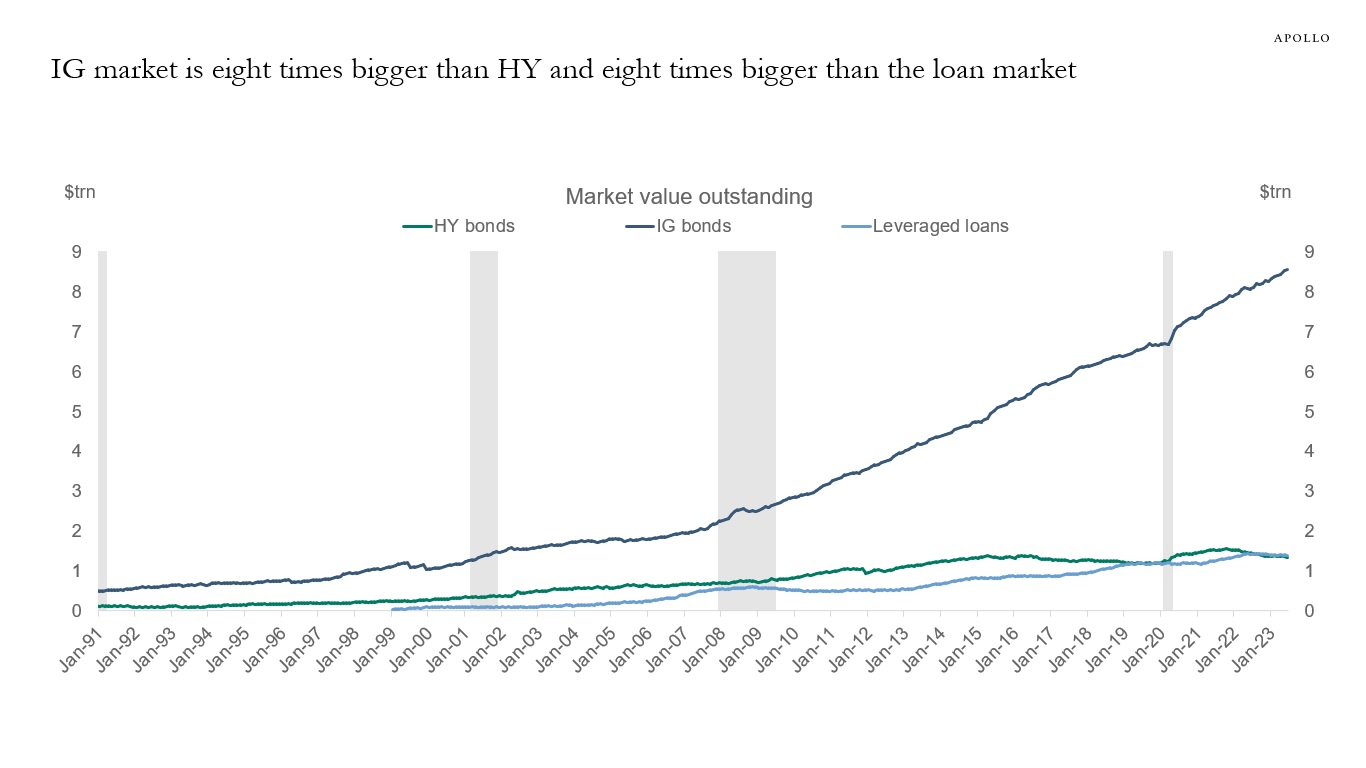
IG market is eight times bigger than HY and eight times bigger than the loan market
Source: ICE BofA, Bloomberg, Pitchbook LCD, Apollo Chief Economist. Note: Ticker used for HY is H0A0 Index and for IG it is C0A0 Index and for Loans it is SPBDALB Index.
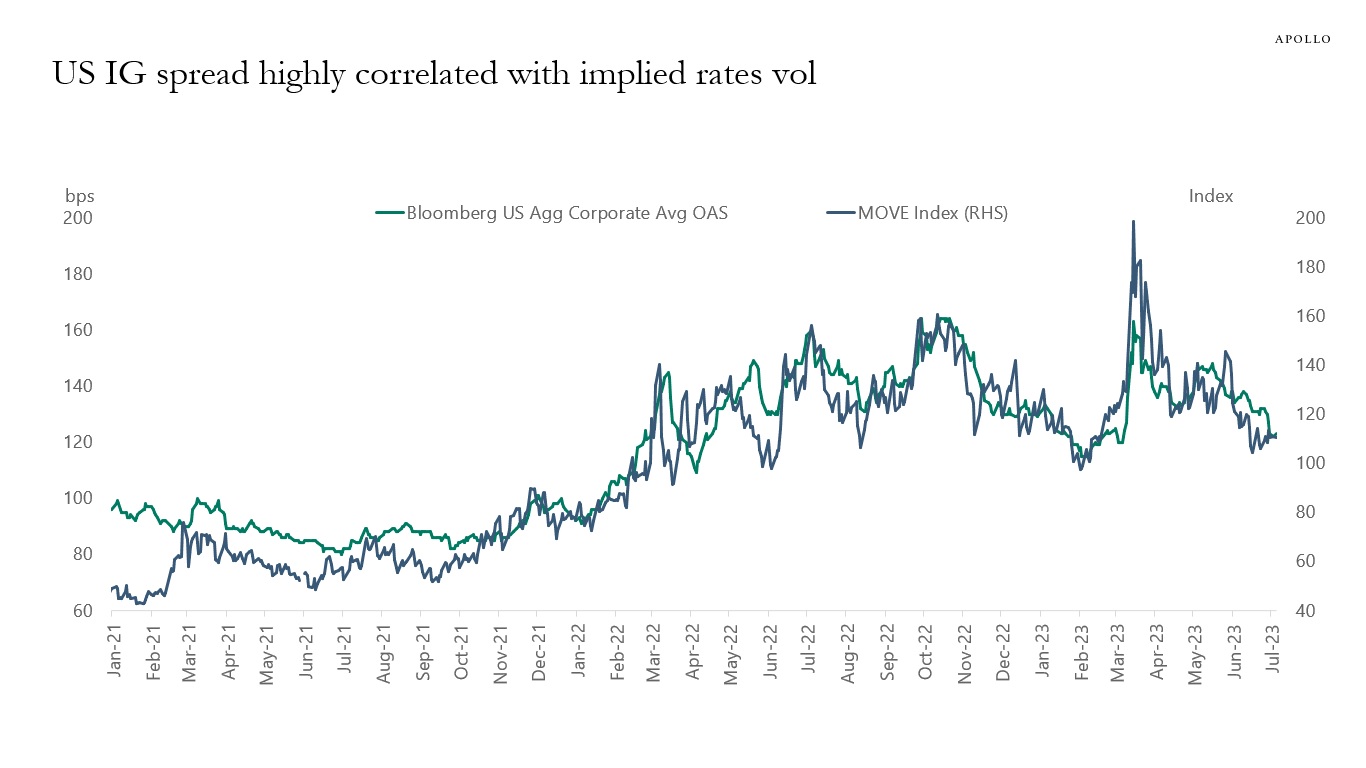
US IG spread highly correlated with implied rates vol
Source: Bloomberg, Apollo Chief Economist
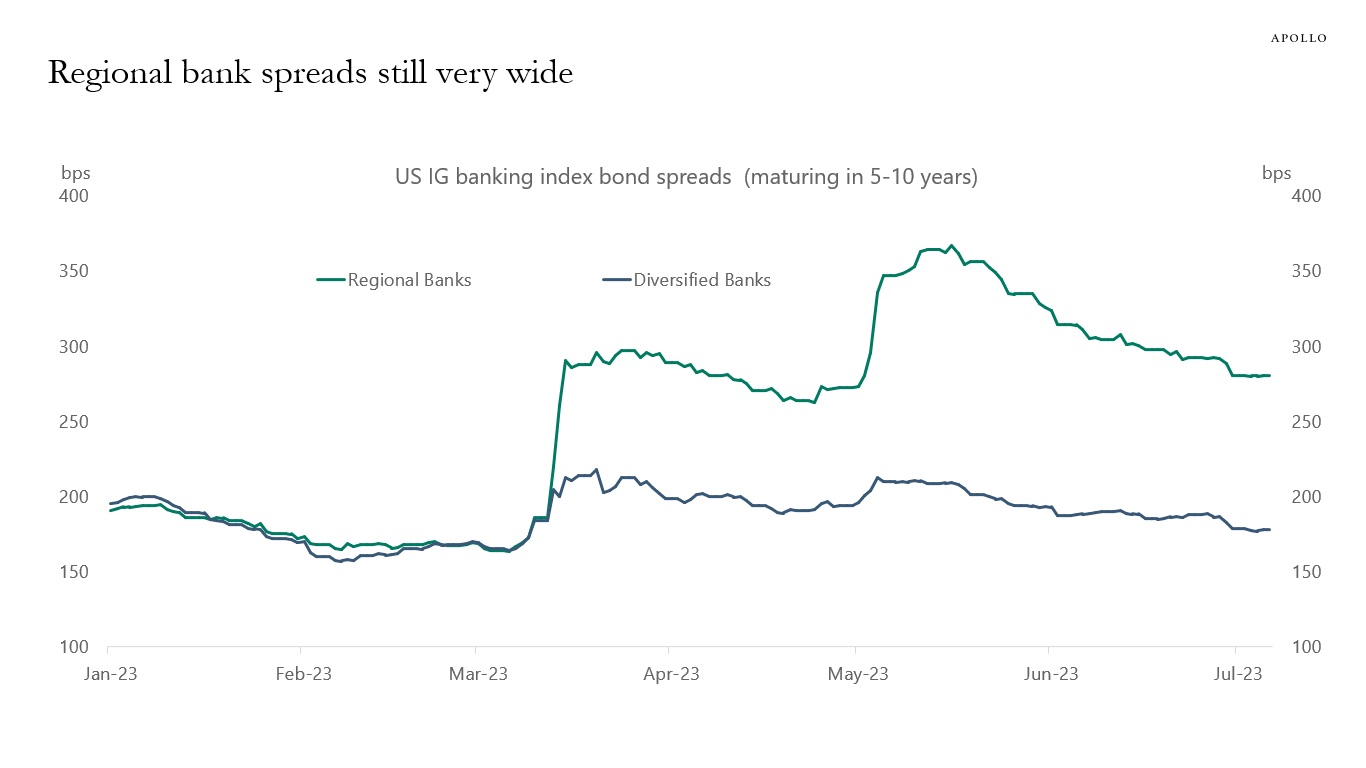
Regional bank spreads still very wide
Source: ICE BofA, Bloomberg, Apollo Chief Economist. Note: Unweighted average spreads of bonds from ICE 5-10 Year US Banking Index, C6PX Index for bonds issued before Jan 1, 2023. There are 8 banks in the Regional index and 41 banks in the Diversified index. Regional banks include BankUnited Inc, Citizens Financial Group, Huntington Bancshares Incorporated, Regions Financial Corporation, Truist Financial Corporation, Webster Financial Corp, Wintrust Financial Corp, and Zions. Diversified banks include JP Morgan, Citibank, Bank of America, etc.
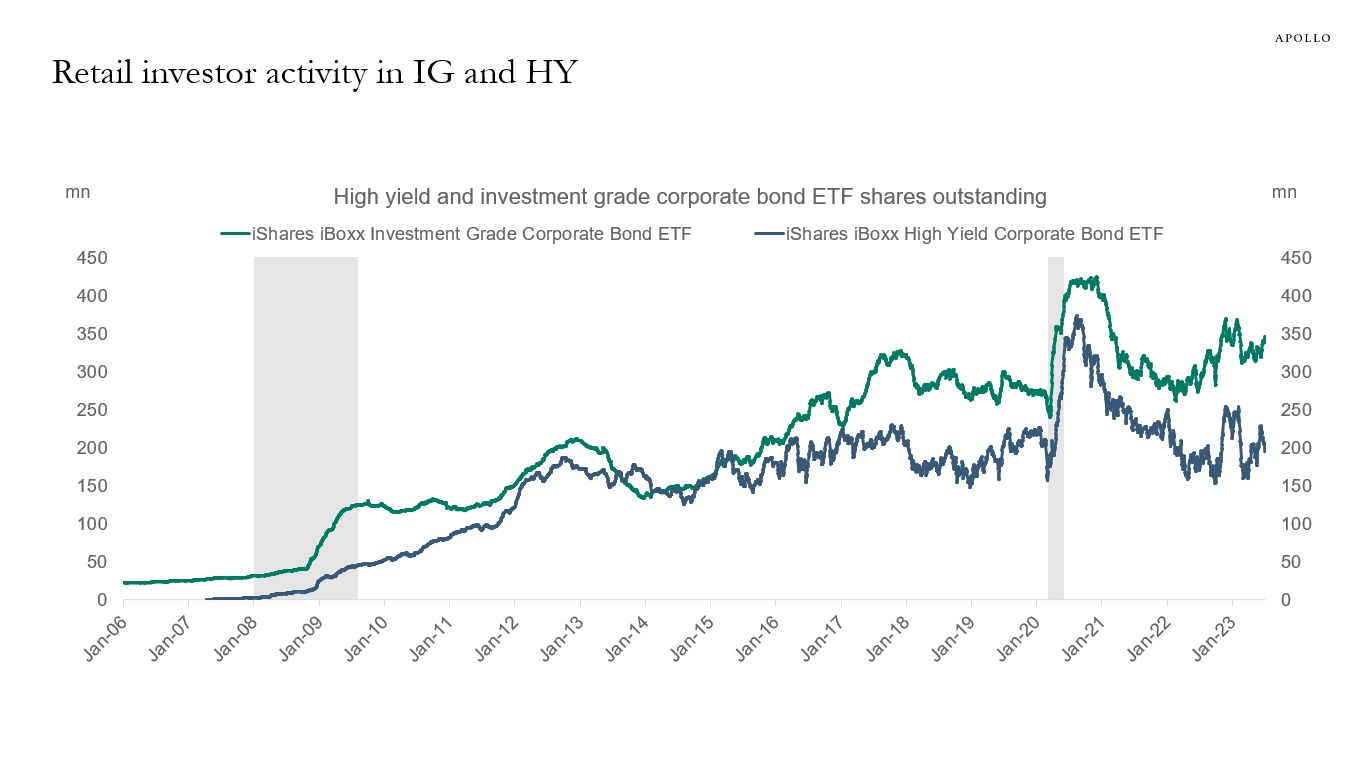
Retail investor activity in IG and HY
Source: Bloomberg, Apollo Chief Economist. Note: Tickers used HYG US Equity and  LQD US Equity.
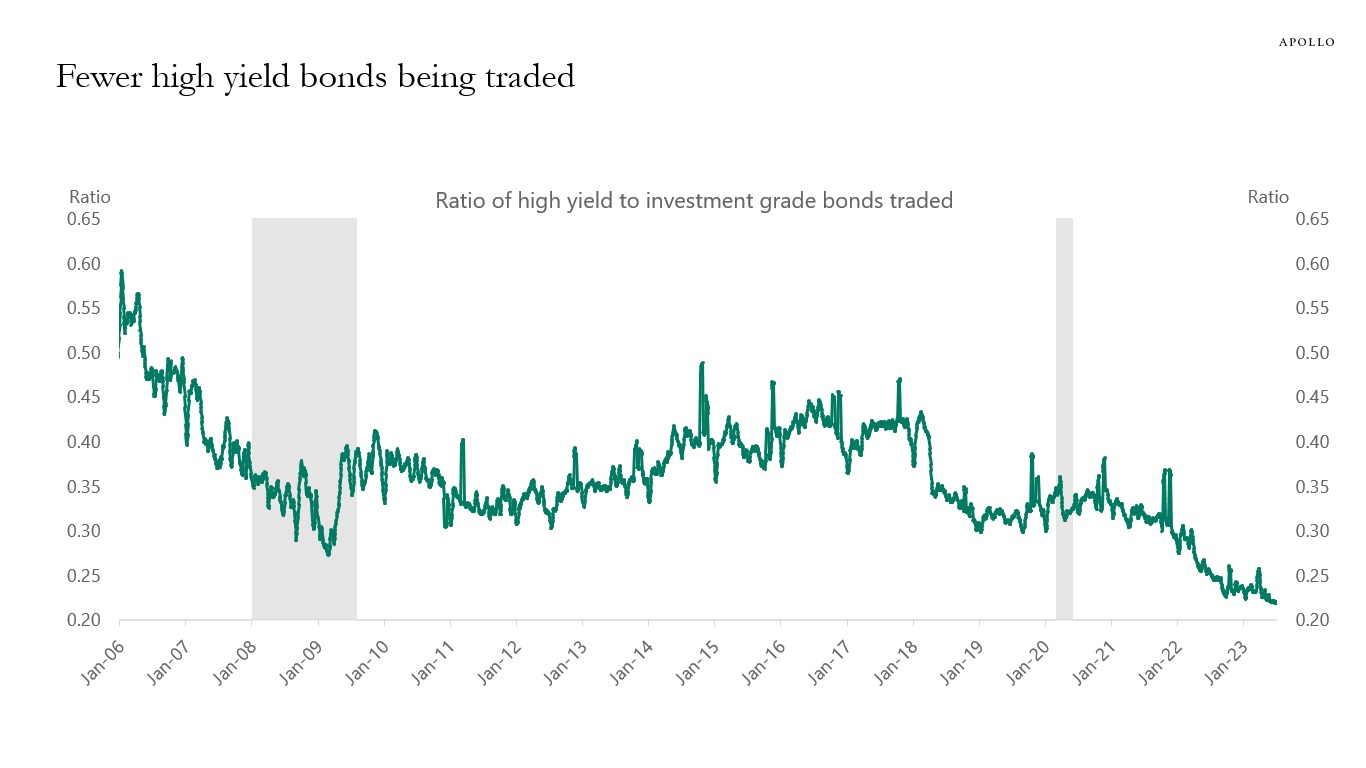
Fewer high yield bonds being traded
Source: FINRA Trace, Bloomberg, Apollo Chief Economist
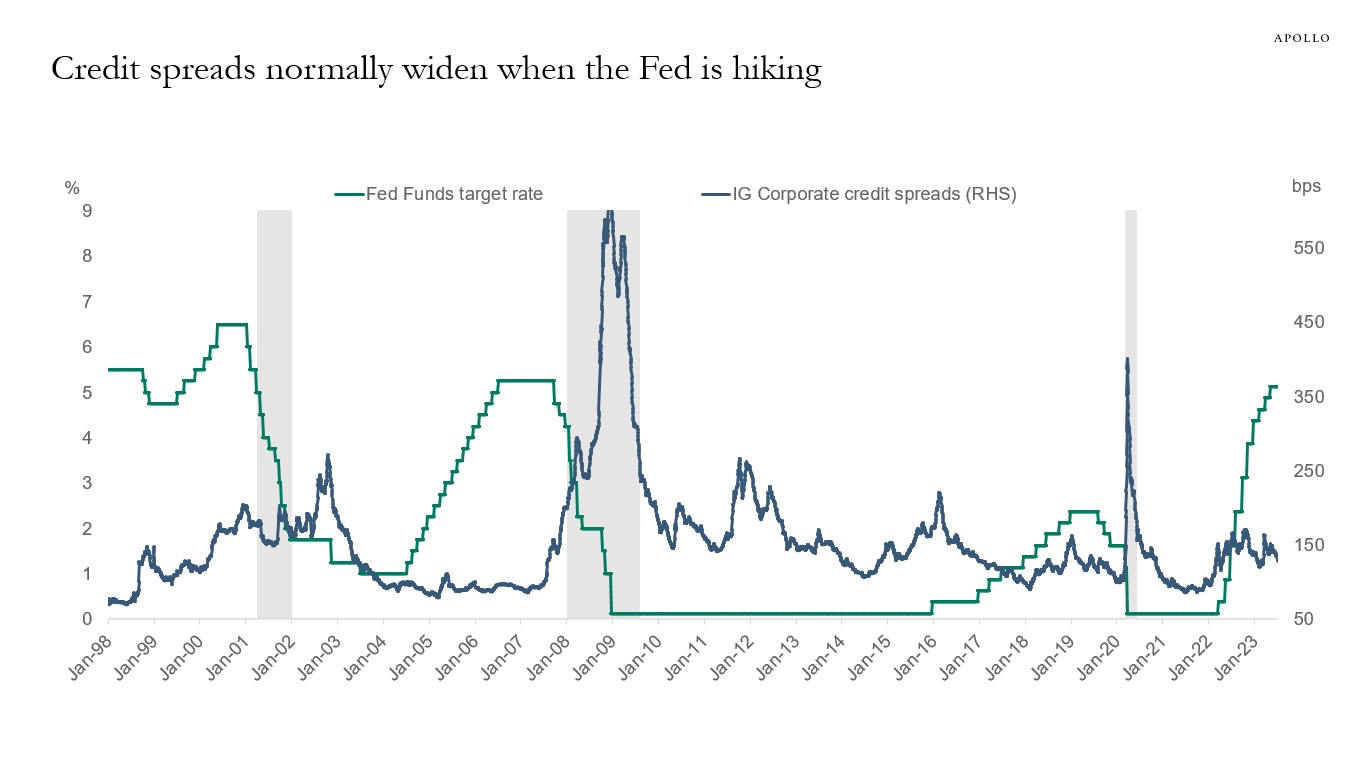
Credit spreads normally widen when the Fed is hiking
Source: Bloomberg, Apollo Chief Economist
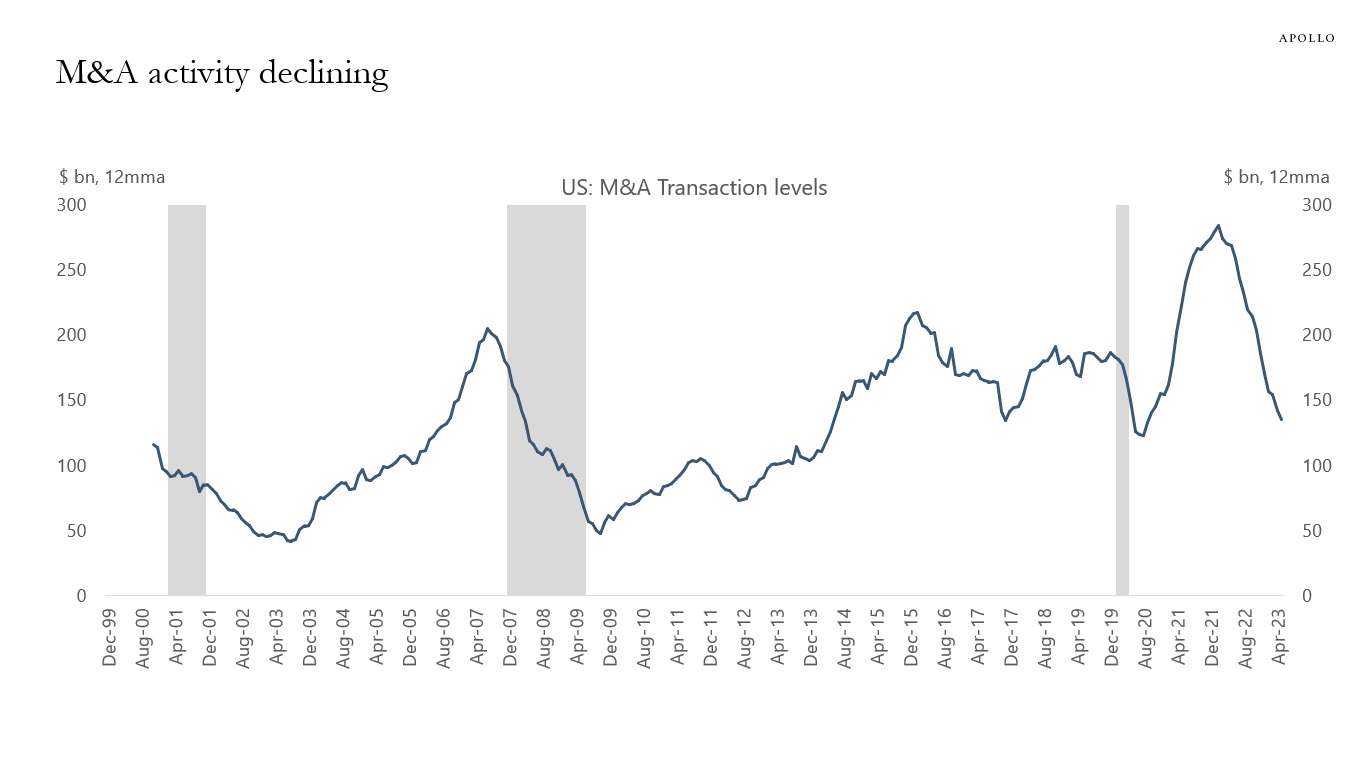
M&A activity declining
Source: Bloomberg, Apollo Chief Economist
Recent Posts

  • The US Retirement Crisis
  • Expected Returns in Public Equities Over the Coming Years
  • A Mystery in Fixed Income
  • More $1 Billion+ Deals in Private Markets
  • 40% of Small-Cap Companies Have No Earnings

Recent Comments

No comments to show.

Archives

  • December 2025
  • November 2025
  • October 2025
  • September 2025
  • August 2025
  • July 2025
  • June 2025
  • May 2025
  • April 2025
  • March 2025
  • February 2025
  • January 2025
  • December 2024
  • November 2024
  • October 2024
  • September 2024
  • August 2024
  • July 2024
  • June 2024
  • May 2024
  • April 2024
  • March 2024
  • February 2024
  • January 2024
  • December 2023
  • November 2023
  • October 2023
  • September 2023
  • August 2023
  • July 2023
  • June 2023
  • May 2023
  • April 2023
  • March 2023
  • February 2023
  • January 2023
  • December 2022
  • November 2022
  • October 2022
  • September 2022
  • August 2022
  • July 2022
  • June 2022
  • May 2022
  • April 2022
  • March 2022
  • February 2022
  • January 2022
  • December 2021
  • November 2021

Categories

  • Apollo Answers
  • Course Introductions
  • Economic Intelligence
  • Hide from Wordpress Search
  • Investment Knowledge
  • Perspectives
  • Redirecting
  • The Daily Spark
  • The View from Apollo
  • The Weekly Brief
  • Uncategorized
  • White Papers

The US Housing Outlook

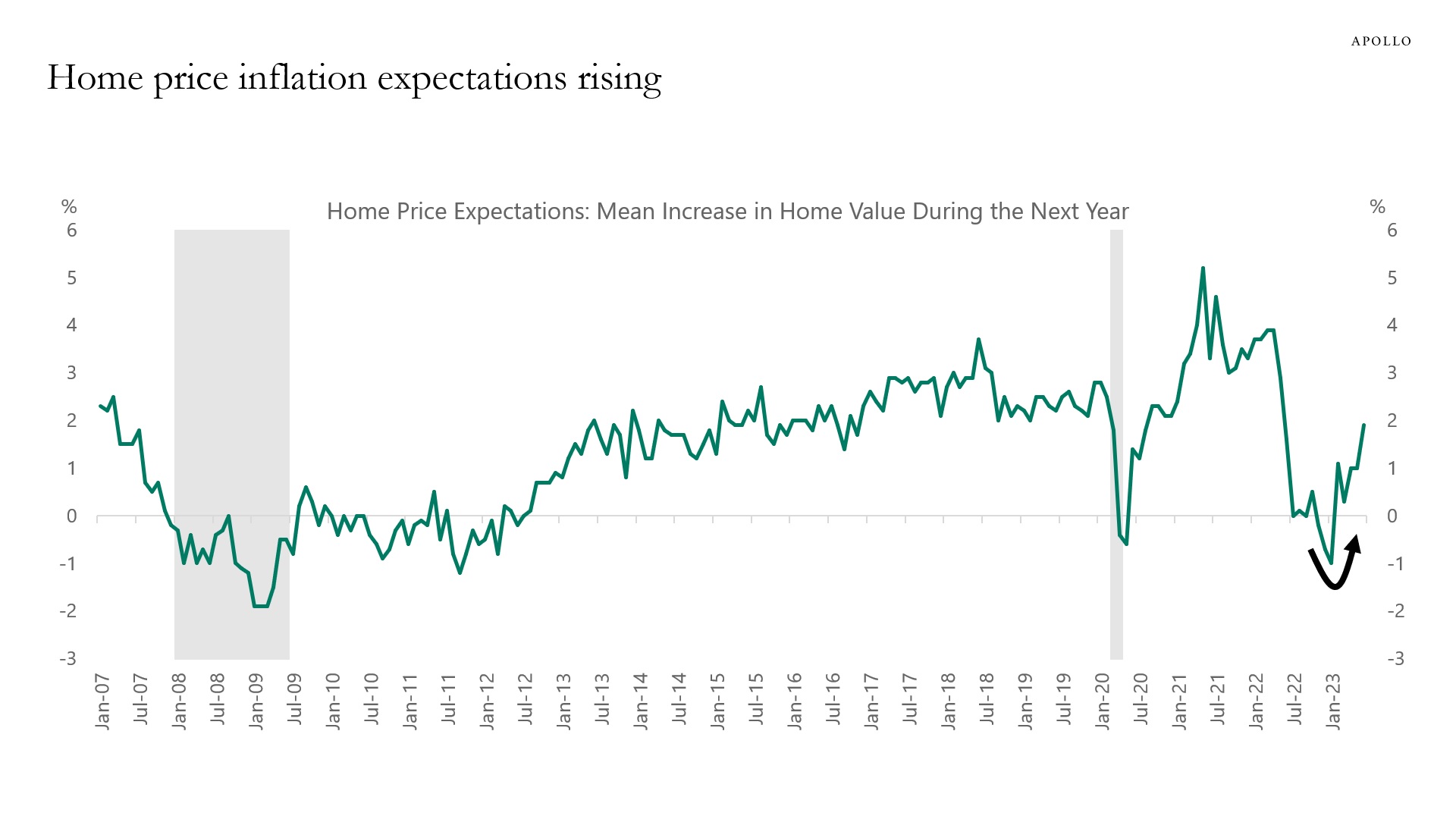
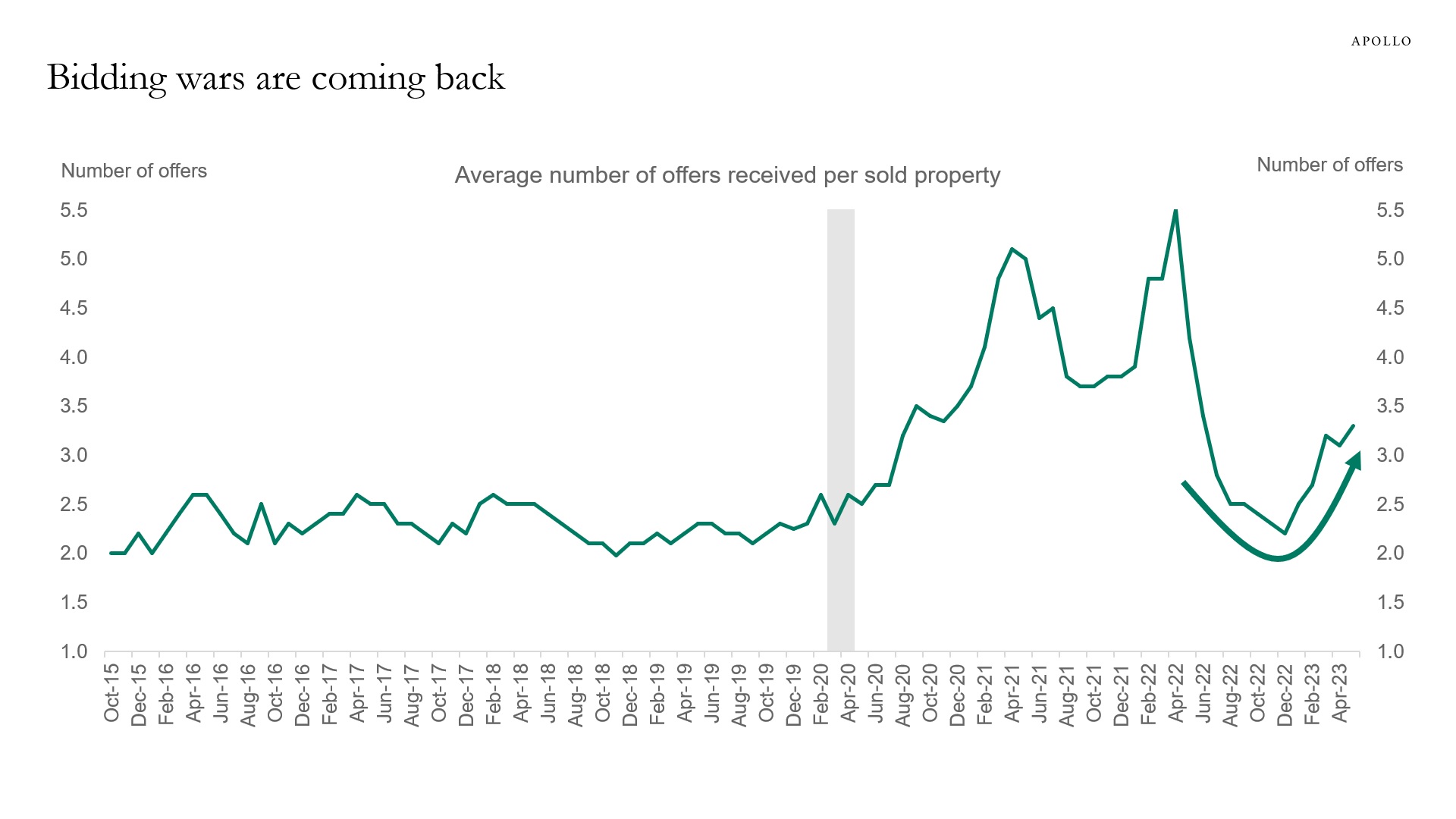
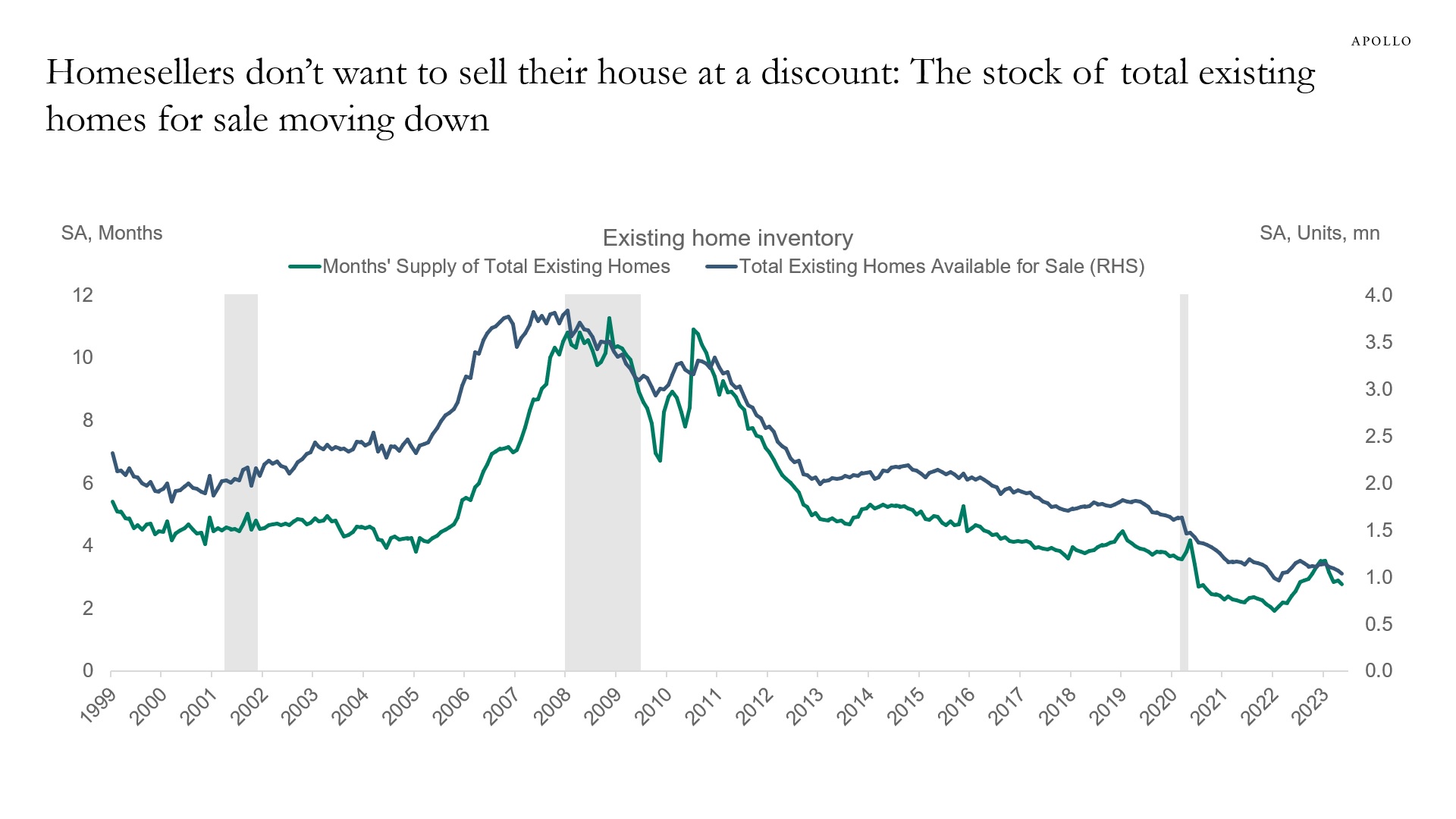
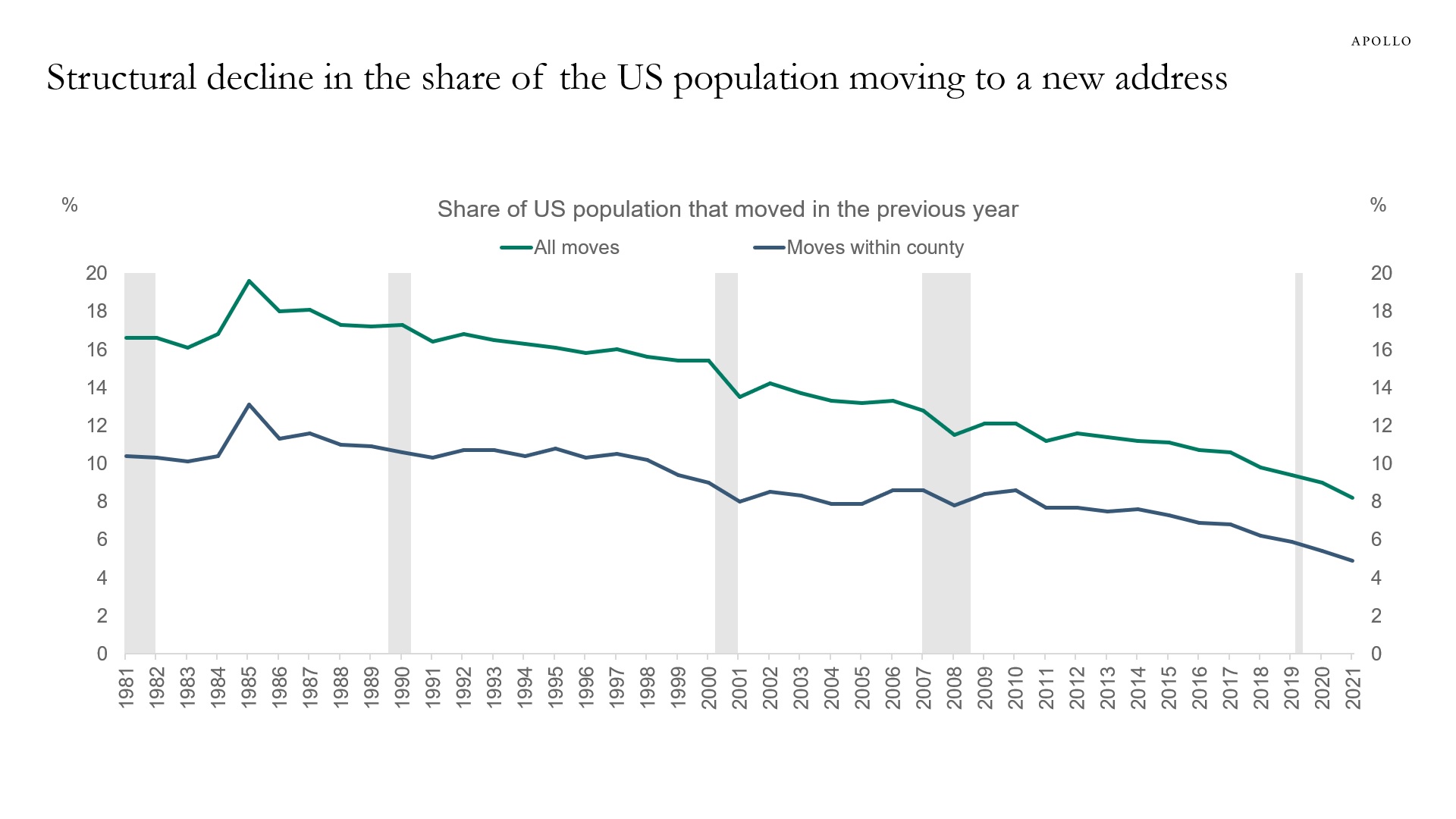
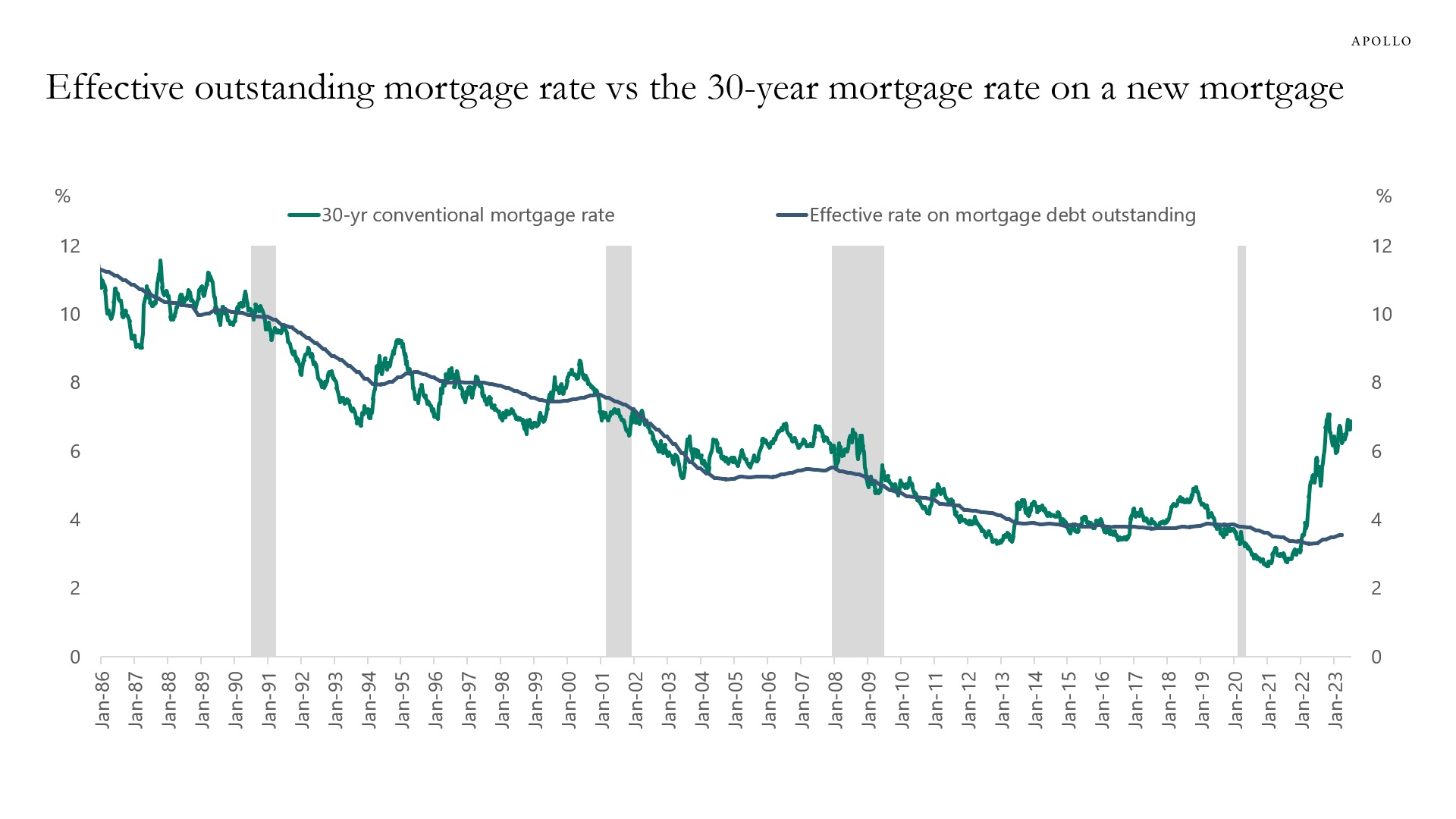
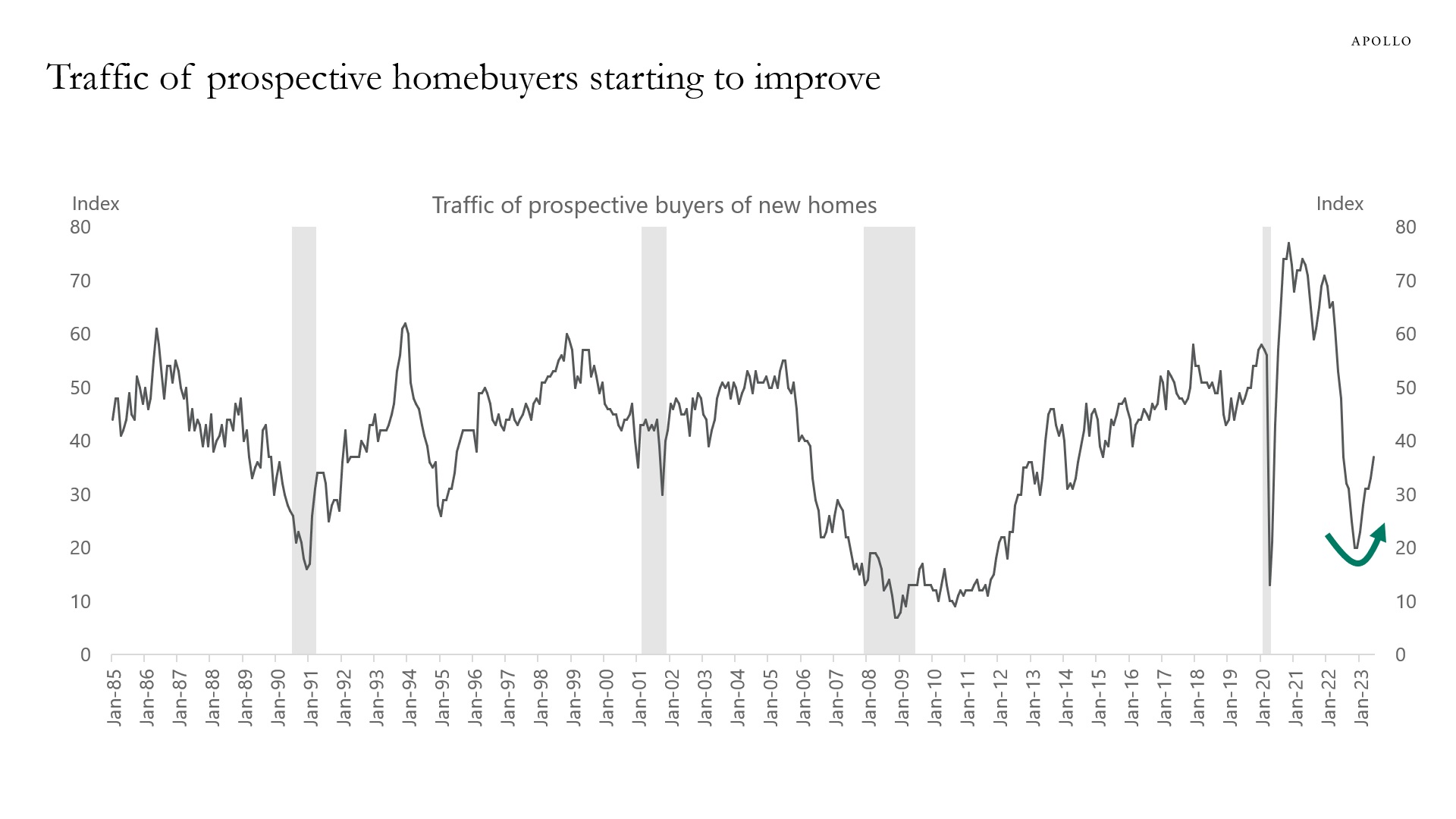
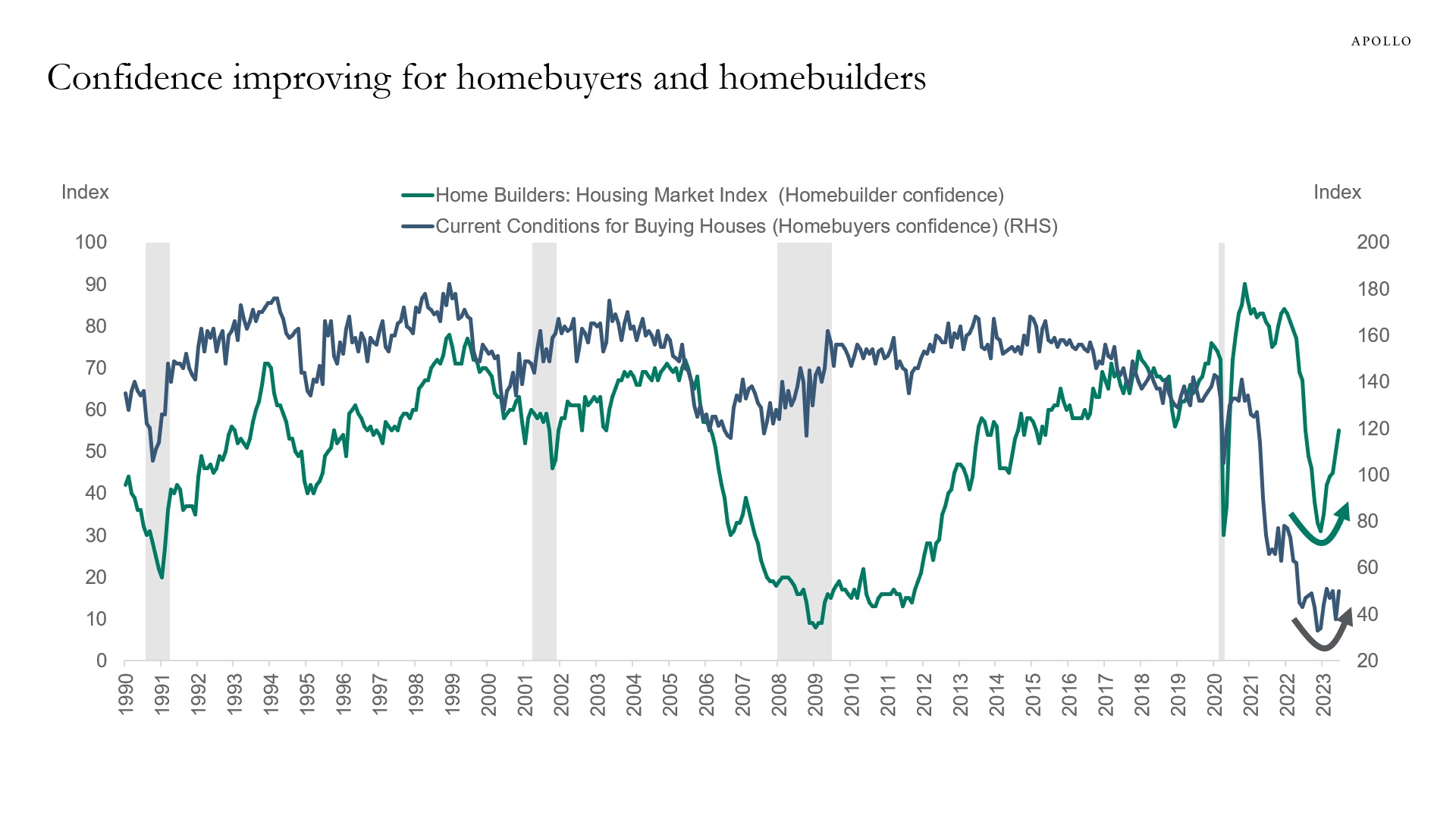
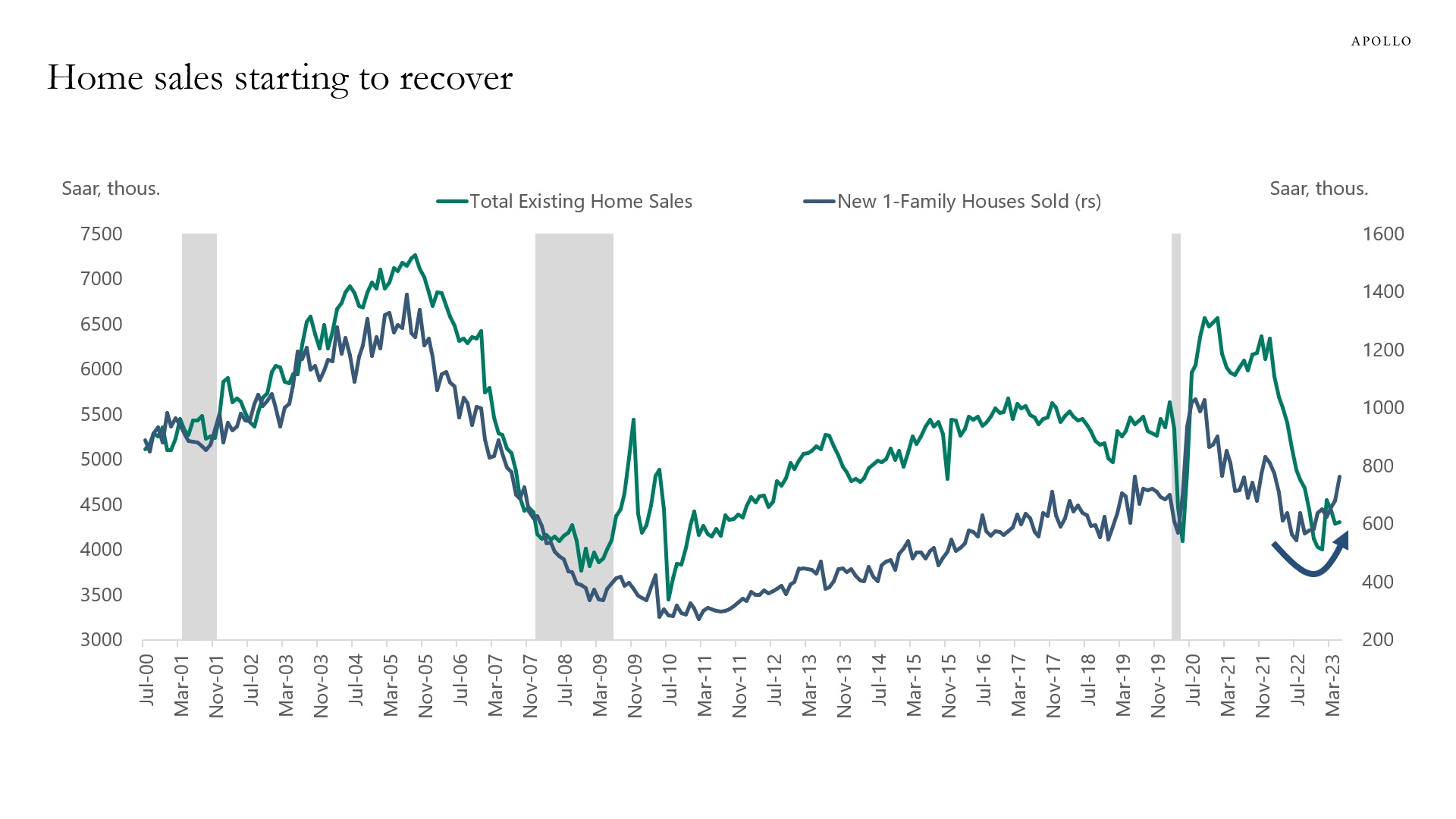
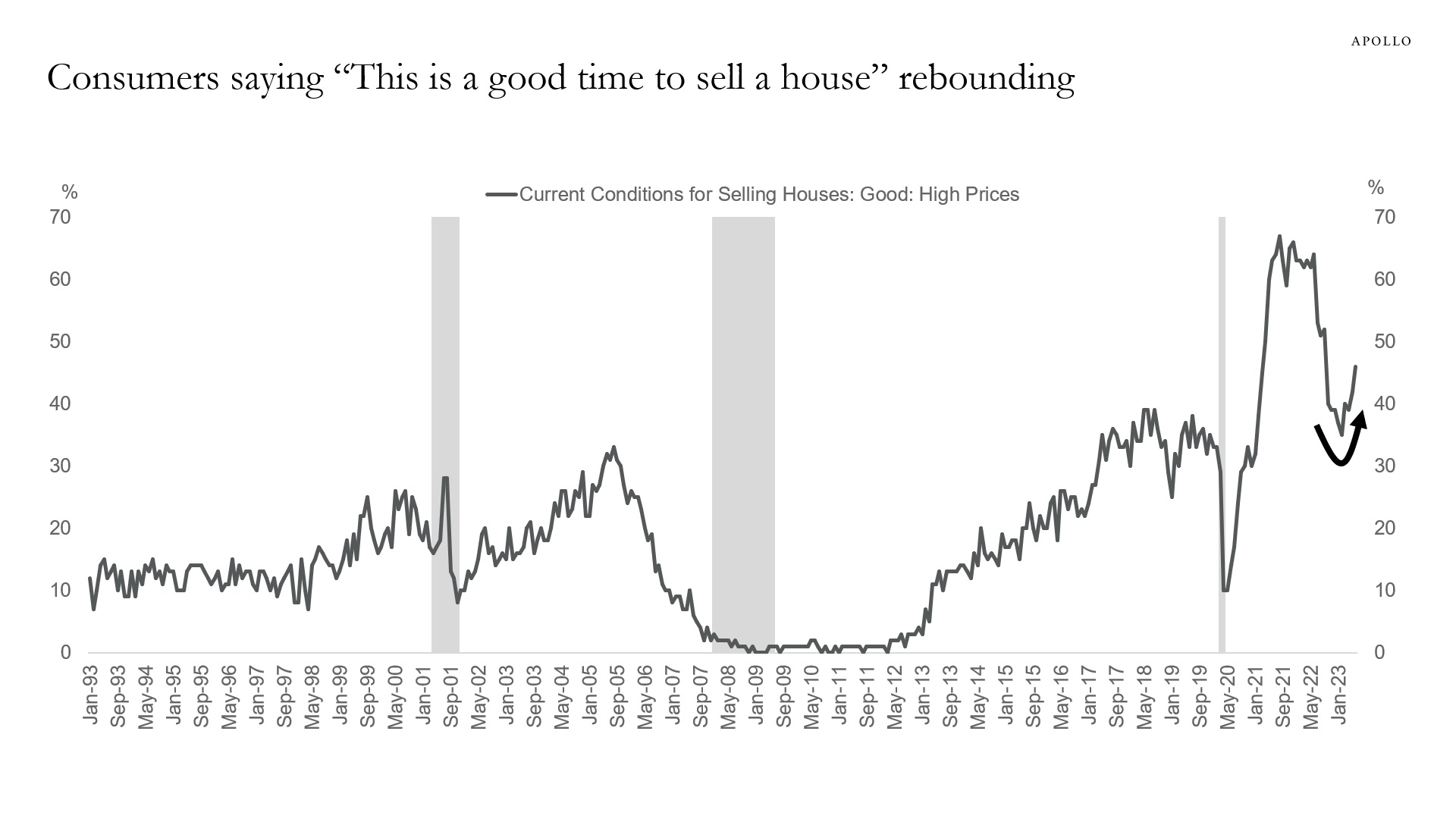
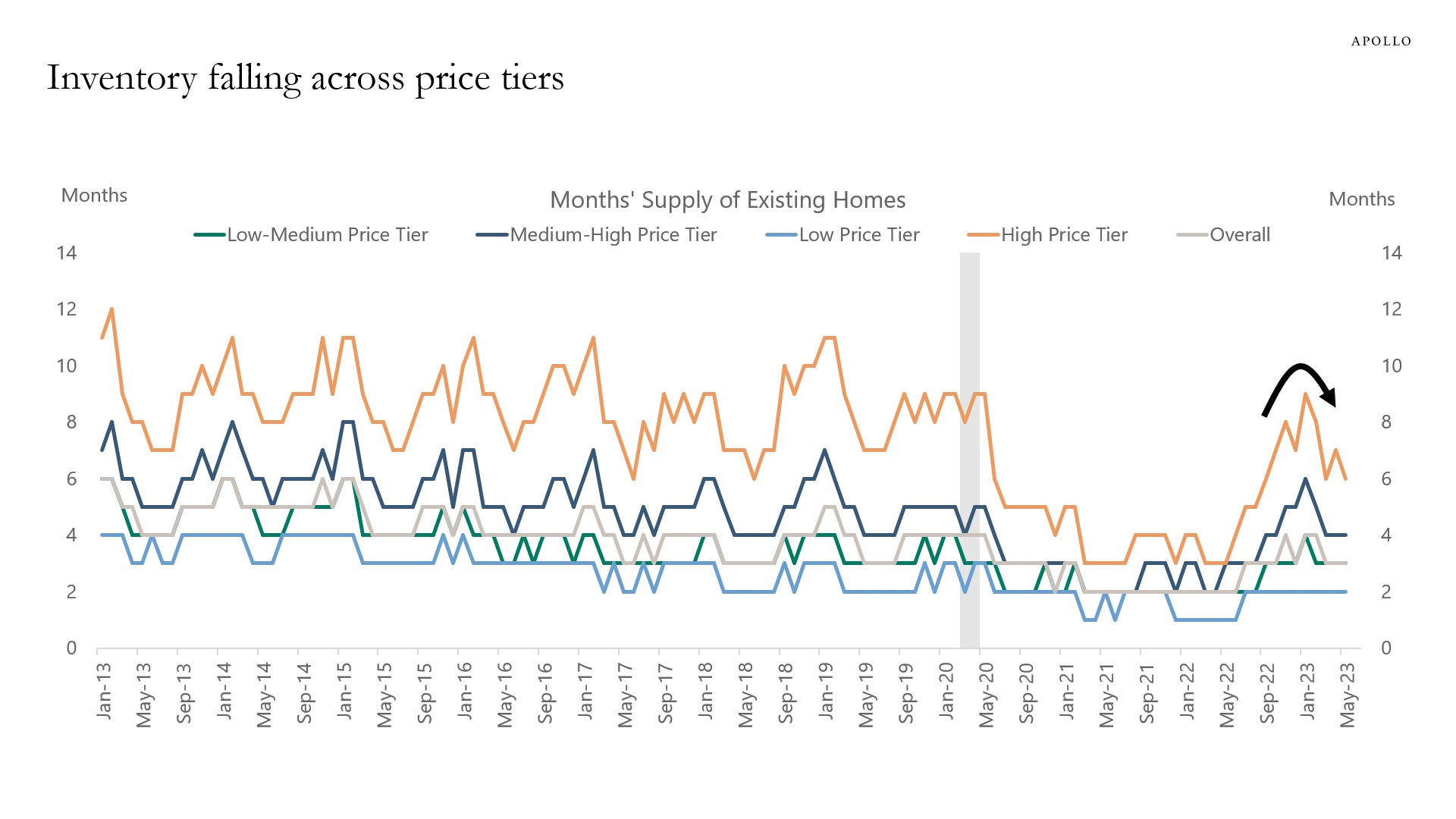
The housing market is recovering, see charts below and this presentation. With core inflation at 5%, this is a problem for the Fed because it will ultimately put upward pressure on housing inflation and make overall inflation more sticky. Maybe the Fed needs not only a softer labor market but also a softer housing market to achieve its goal of getting inflation back to 2%.

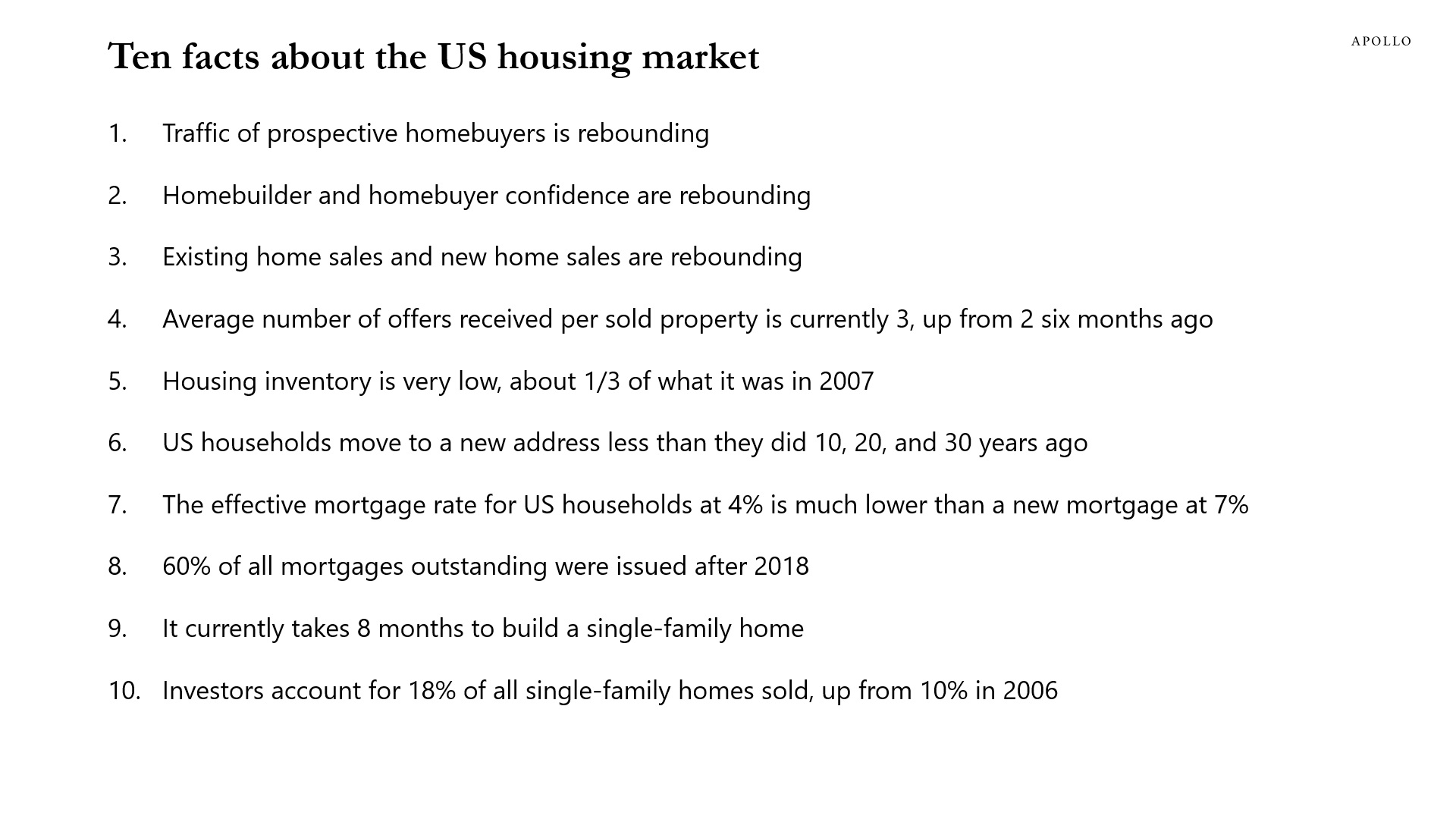
Housing market facts
Source: Apollo Chief Economist
US housing listings and inventory are low
Source: Realtor.com, Apollo Chief Economist
Supply of homes for sales is moving lower
Source: NAR, Apollo Chief Economist
The number of people moving continue to trend lower
Source: Census CPS, Apollo Chief Economist
Mortgage rates are moving up
Source: Freddie Mac, BEA, Bloomberg, Apollo Chief Economist. The effective interest rate (%) reflects the amortization of initial fees and charges over a 10-year period, which is the historical assumption of the average life of a mortgage loan.
Homebuyer traffic is rebounding
Source: National Association of Homebuilders, Bloomberg, Apollo Chief Economist
Confidence for homebuyers and homebuilders are rebounding
Source: University of Michigan, NAHB, Haver Analytics, Apollo Chief Economist
Home sales are starting to come back
Source: Census Bureau, NAR, Haver, Apollo Chief Economist; Forecast is Bloomberg consensus.
It's starting to become a seller's market again.
Source: University of Michigan, Apollo Chief Economist
Housing inventories are falling across all price levels.
Source: American Enterprise Institute, Haver, Apollo Chief Economist
Home prices are expected to move up.
Source: University of Michigan, Haver Analytics, Apollo Chief Economist
Bidding wars are returning
Source: NAR, Apollo Chief Economist
Recent Posts

  • The US Retirement Crisis
  • Expected Returns in Public Equities Over the Coming Years
  • A Mystery in Fixed Income
  • More $1 Billion+ Deals in Private Markets
  • 40% of Small-Cap Companies Have No Earnings

Recent Comments

No comments to show.

Archives

  • December 2025
  • November 2025
  • October 2025
  • September 2025
  • August 2025
  • July 2025
  • June 2025
  • May 2025
  • April 2025
  • March 2025
  • February 2025
  • January 2025
  • December 2024
  • November 2024
  • October 2024
  • September 2024
  • August 2024
  • July 2024
  • June 2024
  • May 2024
  • April 2024
  • March 2024
  • February 2024
  • January 2024
  • December 2023
  • November 2023
  • October 2023
  • September 2023
  • August 2023
  • July 2023
  • June 2023
  • May 2023
  • April 2023
  • March 2023
  • February 2023
  • January 2023
  • December 2022
  • November 2022
  • October 2022
  • September 2022
  • August 2022
  • July 2022
  • June 2022
  • May 2022
  • April 2022
  • March 2022
  • February 2022
  • January 2022
  • December 2021
  • November 2021

Categories

  • Apollo Answers
  • Course Introductions
  • Economic Intelligence
  • Hide from Wordpress Search
  • Investment Knowledge
  • Perspectives
  • Redirecting
  • The Daily Spark
  • The View from Apollo
  • The Weekly Brief
  • Uncategorized
  • White Papers
The View from Apollo - A New Podcast Series

Mid-Year Outlook: What’s next for the US economy, inflation, and the Fed?

Listen to Chief Economist Torsten Slok discuss his mid-year outlook for the economy, markets, and rates. In a broad-ranging conversation with Global Head of Content Strategy J.P. Vicente, Torsten argues that the economic outlook has worsened over the past six months, and the question now is whether we will see a soft landing or a hard one. Also, he provides his views on inflation, what’s next for the Fed, China’s outlook, and what it all can mean for investor portfolios.
Recent Posts

  • The US Retirement Crisis
  • Expected Returns in Public Equities Over the Coming Years
  • A Mystery in Fixed Income
  • More $1 Billion+ Deals in Private Markets
  • 40% of Small-Cap Companies Have No Earnings

Recent Comments

No comments to show.

Archives

  • December 2025
  • November 2025
  • October 2025
  • September 2025
  • August 2025
  • July 2025
  • June 2025
  • May 2025
  • April 2025
  • March 2025
  • February 2025
  • January 2025
  • December 2024
  • November 2024
  • October 2024
  • September 2024
  • August 2024
  • July 2024
  • June 2024
  • May 2024
  • April 2024
  • March 2024
  • February 2024
  • January 2024
  • December 2023
  • November 2023
  • October 2023
  • September 2023
  • August 2023
  • July 2023
  • June 2023
  • May 2023
  • April 2023
  • March 2023
  • February 2023
  • January 2023
  • December 2022
  • November 2022
  • October 2022
  • September 2022
  • August 2022
  • July 2022
  • June 2022
  • May 2022
  • April 2022
  • March 2022
  • February 2022
  • January 2022
  • December 2021
  • November 2021

Categories

  • Apollo Answers
  • Course Introductions
  • Economic Intelligence
  • Hide from Wordpress Search
  • Investment Knowledge
  • Perspectives
  • Redirecting
  • The Daily Spark
  • The View from Apollo
  • The Weekly Brief
  • Uncategorized
  • White Papers

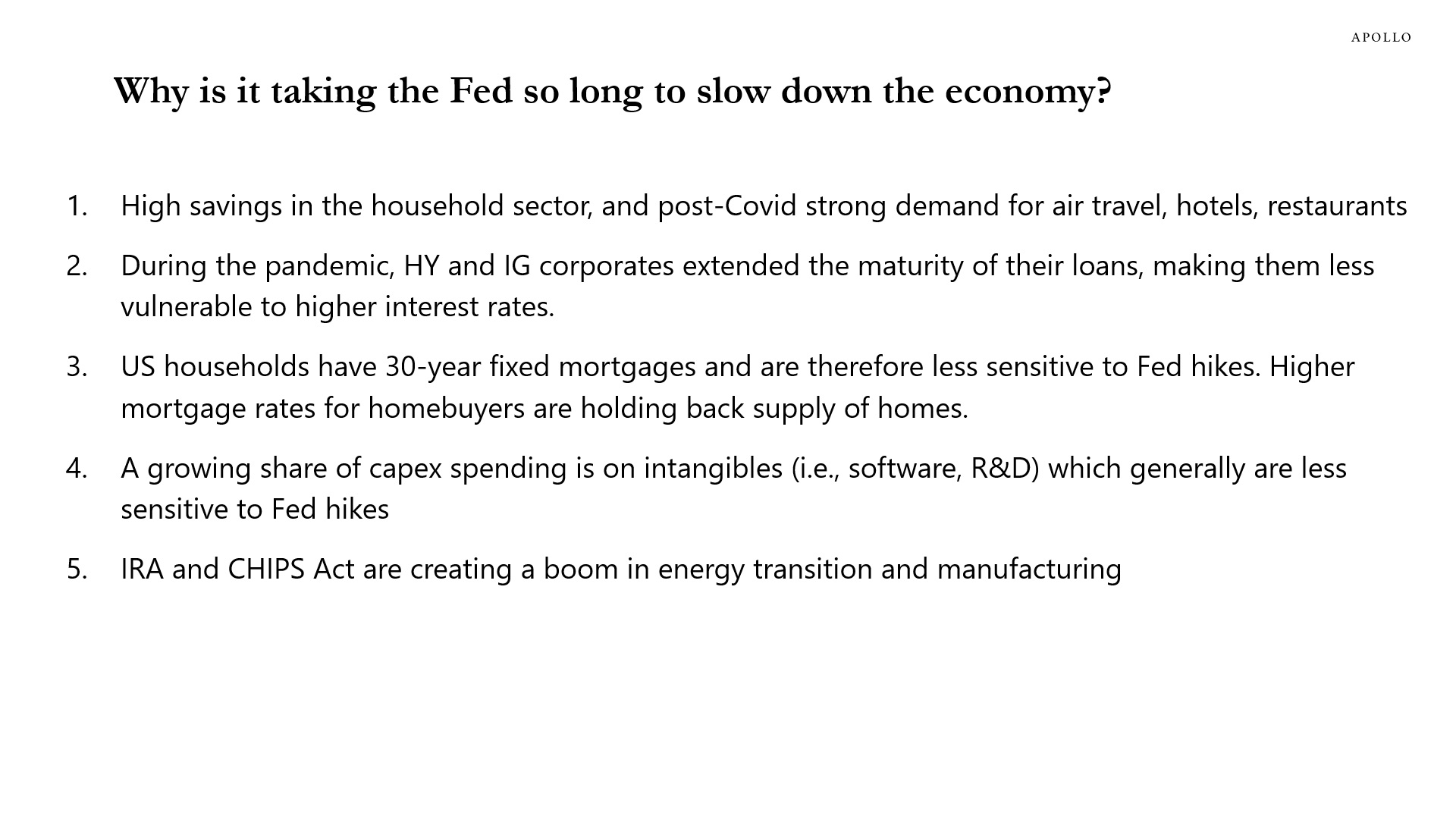
Why Is it Taking the Fed So Long to Slow Down the Economy?

There are cyclical, structural, and policy reasons why the US economy continues to be so strong, see chart below.

The Fed is pressing harder and harder on the brakes, and some indicators are starting to soften in the background, see also the Daily Spark yesterday.

But we are not there yet. The economic data is slowing down and inflation is slowing down. But core inflation is still too high and sticky at 5%.

As a result, the Fed will continue to step on the brakes until they get what they want, namely slower growth and slower inflation.

But the harder the Fed steps on the brakes, the higher the likelihood that we will see a sudden stop in bank lending, capital markets issuance, consumer spending, capex spending, or a correction in financial markets.

Source: Apollo Chief Economist
Recent Posts

  • The US Retirement Crisis
  • Expected Returns in Public Equities Over the Coming Years
  • A Mystery in Fixed Income
  • More $1 Billion+ Deals in Private Markets
  • 40% of Small-Cap Companies Have No Earnings

Recent Comments

No comments to show.

Archives

  • December 2025
  • November 2025
  • October 2025
  • September 2025
  • August 2025
  • July 2025
  • June 2025
  • May 2025
  • April 2025
  • March 2025
  • February 2025
  • January 2025
  • December 2024
  • November 2024
  • October 2024
  • September 2024
  • August 2024
  • July 2024
  • June 2024
  • May 2024
  • April 2024
  • March 2024
  • February 2024
  • January 2024
  • December 2023
  • November 2023
  • October 2023
  • September 2023
  • August 2023
  • July 2023
  • June 2023
  • May 2023
  • April 2023
  • March 2023
  • February 2023
  • January 2023
  • December 2022
  • November 2022
  • October 2022
  • September 2022
  • August 2022
  • July 2022
  • June 2022
  • May 2022
  • April 2022
  • March 2022
  • February 2022
  • January 2022
  • December 2021
  • November 2021

Categories

  • Apollo Answers
  • Course Introductions
  • Economic Intelligence
  • Hide from Wordpress Search
  • Investment Knowledge
  • Perspectives
  • Redirecting
  • The Daily Spark
  • The View from Apollo
  • The Weekly Brief
  • Uncategorized
  • White Papers

Posts navigation

←Previous page Page 1 Page 2 Page 3 Page 4 Next page→
  • Privacy Notice
  • Terms of Use
  • Forward-Looking Statements
Apollo
© Apollo Global Management, Inc. All Rights Reserved.

The Apollo Academy is for informational and educational purposes only and nothing contained herein should be taken as investment advice or a recommendation to enter into any transaction. They are not an invitation by or on behalf of Apollo to any person to buy or sell any security or to adopt any investment strategy, and shall not form the basis of, nor may it accompany nor form part of, any right or contract to buy or sell any security or to adopt any investment strategy. There is no guarantee that the views and opinions expressed in this website will come to pass. For additional information, please see the disclaimers included in each piece of content or the legal page of our website here.